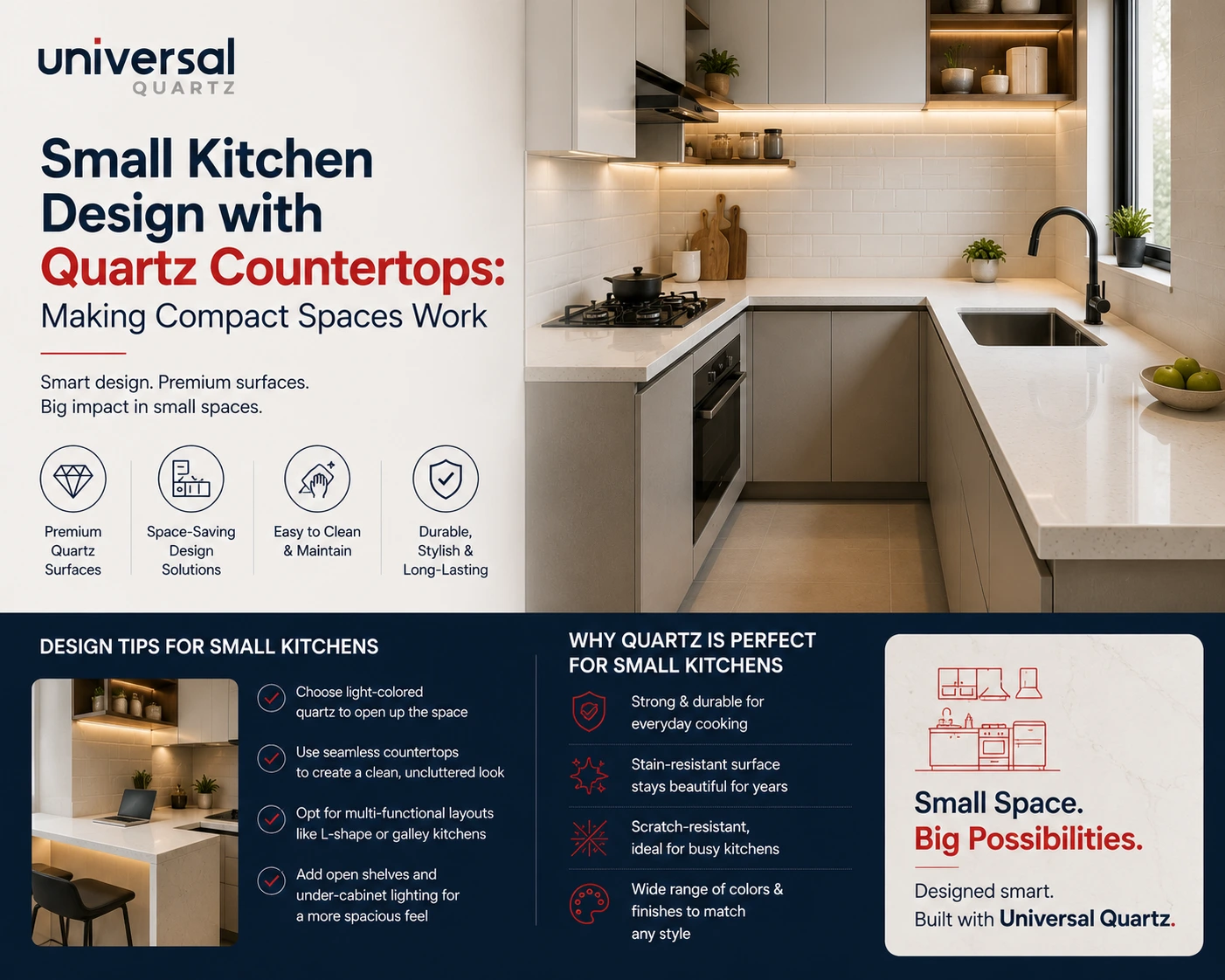
Small kitchens come with real design challenges — limited counter space, tighter storage, and less room for visual mistakes. But the countertop you choose can either work against a small kitchen or quietly do a lot of the heavy lifting to make it feel larger and more functional. This guide walks through, in plain language, how to use quartz countertops specifically to make a compact kitchen work harder and feel better.
Why the Countertop Matters So Much in a Small Kitchen
In a small kitchen, there’s very little visual “breathing room,” so every surface has an outsized effect on how the whole space feels. A countertop that’s too busy, too dark, or poorly matched to the rest of the room can make an already tight kitchen feel cluttered and closed in. A well-chosen quartz countertop, on the other hand, can create a sense of openness and flow, even in a genuinely small footprint.
How Quartz Helps Small Kitchens Specifically
1. Consistent, Seamless Slabs Reduce Visual Clutter
Because quartz is engineered, manufacturers can produce large, consistent slabs with minimal seams. In a small kitchen, fewer visible seams and joints mean fewer visual “breaks” in the surface, which helps the counter read as one continuous, calm space rather than a patchwork of pieces.
2. Light Colors Make the Space Feel Larger
Light, warm neutral quartz tones — soft whites, creams, and light greys — reflect more light around a room, which is especially valuable in small kitchens that often don’t have much natural light to begin with. Lighter countertops also tend to make lower cabinets and floors feel less heavy and boxed-in.
3. No Sealing Means Less to Manage in a Tight Workflow
Small kitchens usually mean less separation between prep, cooking, and cleaning zones — you’re doing all three in close quarters. A non-porous quartz surface that never needs sealing and resists stains without much effort reduces one more thing you have to actively manage in a space that’s already asking a lot of you.
4. Waterfall Edges Add Drama Without Adding Clutter
A waterfall edge — where the countertop material continues down the side of an island or peninsula — is a popular way to add a high-end visual feature to a small kitchen without needing extra floor space. It creates a strong design statement using a surface you’re already installing anyway.
5. Matching Backsplash Reduces Visual Breaks
Using the same quartz slab for both the countertop and backsplash creates a continuous, uninterrupted surface from counter to wall. In a small kitchen, this continuity removes another visual “line” that can otherwise make the space feel more segmented and busy.
6. Thin Edge Profiles Keep the Look Light
Thicker, heavily detailed edge profiles can make counters feel bulkier and more dominant in a small room. A slimmer, simpler edge profile on quartz keeps the visual weight of the countertop lighter, which suits compact kitchens better than an elaborate, heavy-looking edge.
Design Tips for Making a Small Kitchen Feel Bigger
- Choose a light or medium-toned quartz rather than a very dark color, unless your kitchen already gets strong natural light
- Keep the color and finish consistent across the counters, island, and backsplash where possible
- Use a simple, slim edge profile instead of a thick, decorative one
- Consider a waterfall edge on a small island for visual impact without using extra square footage
- Pick a finish with a subtle pattern rather than a very busy, high-contrast veining, which can visually shrink a small space
- Match undertones with your cabinetry so the transition between surfaces feels smooth rather than segmented
If you’re also deciding on colors and finishes for the rest of your kitchen, our guide on how to choose the best quartz kitchen countertops walks through that decision in more detail.
Common Small Kitchen Layouts and What Works Well
Galley Kitchens
In a narrow, two-sided galley kitchen, a consistent light quartz color on both sides helps the space feel wider than it is. Avoid heavily patterned slabs here, since strong veining on two facing walls can feel busy rather than expansive.
L-Shaped Kitchens
L-shaped layouts often have one corner that acts as a visual anchor. A quartz countertop with a subtle, unified pattern helps that corner feel like part of one continuous surface rather than two separate counters meeting at an angle.
Kitchens With a Small Island
Even a small island can serve as a strong design feature with a quartz waterfall edge or a slightly bolder color than the main counters, since it’s a contained area that won’t overwhelm the rest of the room.
A Quick Word on Experience
Getting a small kitchen to feel open and functional isn’t just about picking a light color — it comes down to details like slab consistency, seam placement, and finish, which depend heavily on the manufacturer’s product range and fabrication support. A manufacturer with a wide range of colors, finishes, and slab sizes gives you more flexibility to make these small, cumulative design choices that matter so much in a compact space.
To see the full range of options available, take a look at our overview of the best quartz countertop brands in India for 2026.
Frequently Asked Questions
What is the best quartz color for a small kitchen?
Light, warm neutral tones like soft white, cream, or light grey generally work best for small kitchens, since they reflect more light and help the space feel larger and less closed in.
Should I match my countertop and backsplash in a small kitchen?
Yes, this is often a good idea. Using the same quartz slab for both creates a continuous surface that reduces visual breaks, which helps a small kitchen feel more open.
Is a waterfall edge a good idea for a small kitchen island?
Yes. A waterfall edge adds a strong design feature without requiring extra floor space, making it a popular choice for small islands specifically.
Does the edge profile of a countertop matter in a small kitchen?
Yes. A thick, heavily detailed edge can make counters feel bulkier. A slimmer, simpler edge profile tends to suit small kitchens better by keeping the visual weight of the countertop lighter.
Can a dark quartz countertop work in a small kitchen?
It can, especially if the kitchen has strong natural light or you want a bold, dramatic look. In lower-light small kitchens, though, lighter tones generally do more to make the space feel open.
Related Reading
Explore more on choosing quartz countertops and kitchen design:
How to Choose the Best Quartz Kitchen Countertops
Best Quartz Countertop Brand in India 2026
Quartz Stone Price in India 2026
Final Thoughts
A small kitchen doesn’t have to feel cramped. The right quartz countertop — light in tone, consistent in pattern, simply edged, and thoughtfully matched to your backsplash and cabinetry — can do a surprising amount of work to make a compact space feel calm, open, and genuinely functional. Focus on consistency and light over trying to fit in every design trend at once, and the space will feel bigger for it.