“Durable” gets used a lot in countertop marketing, but what does it actually mean day to day? A kitchen countertop deals with hot pans, spilled turmeric, dragged chopping boards, and constant cleaning — often all in the same afternoon. This guide looks specifically at how quartz performs against the three things that matter most in a kitchen: heat, stains, and scratches, explained in plain, honest language.
Heat Resistance: What Quartz Can and Can’t Handle
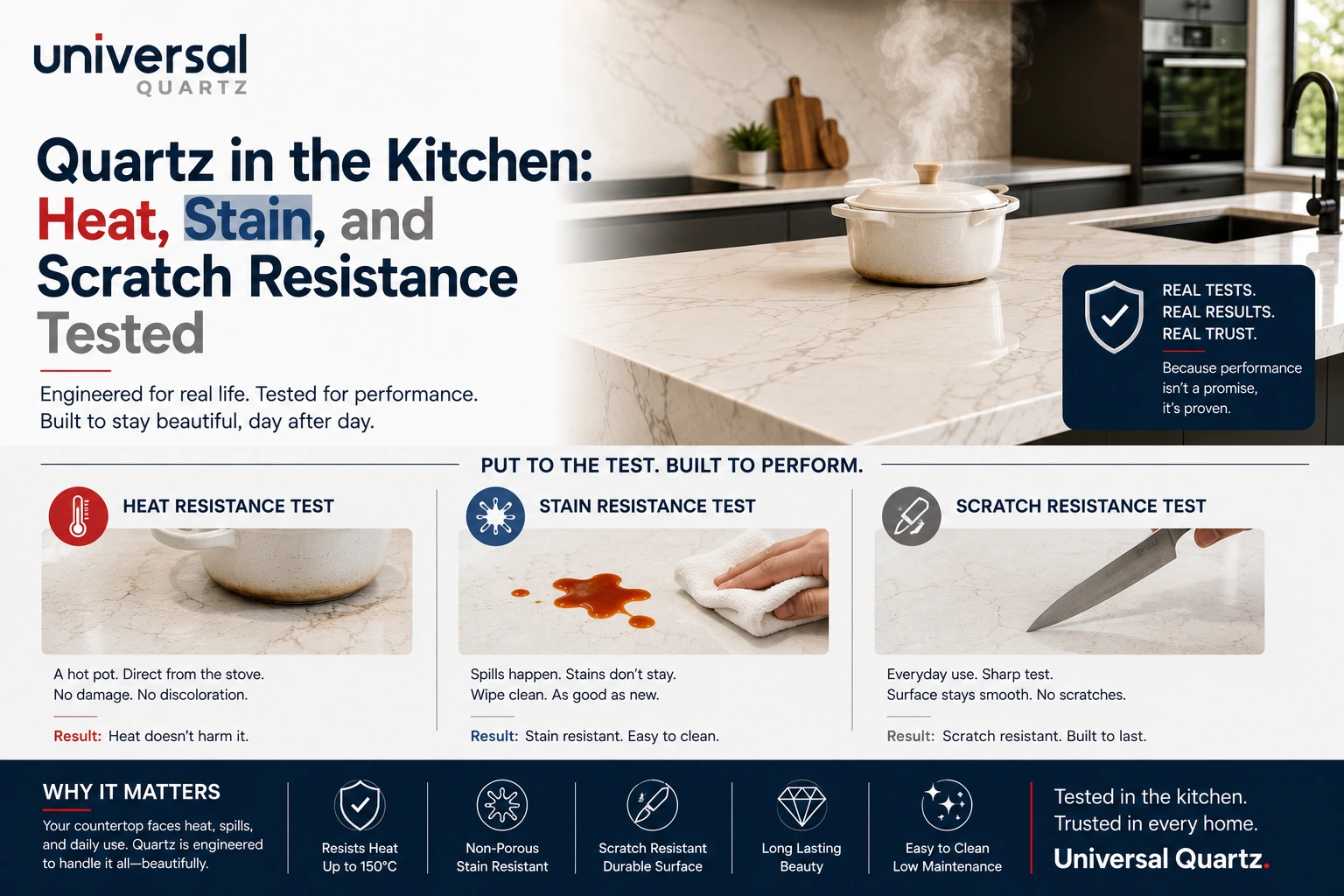
Quartz countertops can generally handle everyday kitchen heat, like a warm plate or a pan that’s cooled slightly after cooking. The resin binder inside quartz gives it decent heat tolerance for normal use.
However, quartz is not heat-proof. Sudden, extreme, or prolonged direct heat — like placing a pan straight off a high flame directly onto the surface — can affect the resin over time, potentially causing discoloration or small stress marks in that spot. This is different from natural stone like granite, which can generally tolerate slightly higher direct heat because it doesn’t contain resin.
What This Means in Practice
- Use a trivet or hot pad under pots and pans straight from the stove or oven
- Avoid setting slow cookers or other continuously heat-emitting appliances directly on the surface for extended periods
- Quick contact with a warm (not scorching) pan is generally fine and won’t damage the surface
In simple terms: quartz handles the heat of daily cooking well, but it isn’t designed to be a direct landing pad for cookware straight off high heat.
Stain Resistance: Why Quartz Handles Kitchen Spills Well
This is where quartz genuinely stands out compared to many other countertop materials. Because quartz is non-porous — meaning it doesn’t have tiny holes that liquid can soak into — spills sit on top of the surface instead of sinking in.
In everyday kitchen use, this means common offenders like turmeric, curry, tomato sauce, coffee, tea, wine, and oil generally wipe away cleanly if you clean them up within a reasonable time, rather than leaving a permanent mark the way they might on an unsealed, porous surface.
What This Means in Practice
- Wipe up spills when convenient; you don’t need to panic-clean the moment something spills, unlike with some natural stones
- No sealing is required, ever, which is a genuine long-term advantage over granite and marble
- Strong dyes left for a very long time (days, not minutes) can still be harder to remove, so it’s still good practice not to let spills sit indefinitely
Scratch Resistance: How Quartz Holds Up to Daily Wear
Quartz is a hard, dense material, and it resists everyday scratching from things like utensils, pots, and normal kitchen activity noticeably well. This is one of the more practical, real-world benefits for a surface that gets used constantly.
That said, no countertop material is entirely scratch-proof. Extremely hard or sharp objects — like cutting directly on the surface with a knife — can potentially leave marks over time, even on quartz.
What This Means in Practice
- Always use a cutting board when chopping or slicing; this is good practice for any countertop material, not just quartz
- Everyday contact from pots, pans, and utensils is generally not a concern
- Avoid dragging heavy, rough-bottomed cookware or appliances across the surface repeatedly
How Quartz Compares to Other Common Kitchen Surfaces
Quartz vs. Granite
Granite handles slightly higher direct heat but is porous and needs regular sealing to resist stains. Quartz needs no sealing and resists stains better overall, but is more heat-sensitive to sudden, extreme temperatures.
Quartz vs. Marble
Marble is softer and more porous than quartz, making it noticeably more prone to both staining and scratching. Quartz outperforms marble in daily durability for a busy kitchen.
Quartz vs. Laminate
Laminate can be damaged by heat and scratches far more easily than quartz, and once damaged, it typically can’t be repaired or refinished the way some other surfaces can.
For a broader look at how these trade-offs affect your overall decision, see our guide on how to choose the best quartz kitchen countertops.
Simple Habits That Protect Your Quartz Countertop
- Use trivets and hot pads for anything straight off the stove or oven
- Always cut on a cutting board, never directly on the countertop
- Wipe up spills within a reasonable time, especially strongly colored liquids
- Use mild soap and a soft cloth for daily cleaning; avoid harsh, abrasive scrubbing pads
- Avoid placing extremely hot cookware directly on the surface for prolonged periods
A Quick Word on Experience
How well quartz actually performs against heat, stains, and scratches depends heavily on the manufacturing quality behind the slab. A denser, well-compacted slab — the kind produced using advanced technology and backed by certifications like ISO 9001:2015 — will generally perform closer to the results described here than a lower-quality slab made with less consistent manufacturing. This is another reason it’s worth checking a manufacturer’s certifications and track record before you buy, not just the color and finish.
To understand how manufacturing quality affects these results, our article on engineered quartz in India explains the process in more detail.
Frequently Asked Questions
Can I put a hot pan directly on a quartz countertop?
It’s best to avoid it. Quartz handles everyday warmth well, but sudden, extreme heat from a pan straight off high heat can affect the resin binder over time. Use a trivet or hot pad instead.
Does quartz stain from turmeric and curry?
Generally, no, if wiped up within a reasonable time. Quartz is non-porous, so these common kitchen spills sit on the surface rather than soaking in, unlike porous materials such as unsealed granite.
Can quartz be scratched by knives?
Quartz resists everyday scratching well, but cutting directly on the surface with a knife can still leave marks over time. Always use a cutting board.
Is quartz more durable than granite for kitchens?
It depends on the type of durability. Quartz resists stains better and needs no sealing, while granite can tolerate slightly higher direct heat. Overall, quartz tends to require less day-to-day maintenance.
Do I need to seal quartz to protect it from stains?
No. Quartz is non-porous by design and never needs sealing, which is one of its biggest practical advantages over natural stone in a kitchen.
Related Reading
Explore more on choosing and understanding quartz countertops for your kitchen:
How to Choose the Best Quartz Kitchen Countertops
Quartz Stone Price in India 2026
Final Thoughts
Quartz genuinely performs well against the three things that matter most in a kitchen — heat, stains, and scratches — but “durable” doesn’t mean “indestructible.” A few simple habits, like using a trivet and a cutting board, go a long way toward keeping a quartz countertop looking new for years. And as with most claims about performance, the manufacturing quality behind the slab matters just as much as the material itself.