Quartz stone has become one of the most popular surface materials in Indian homes over the last decade. From kitchen countertops to flooring and wall cladding, more homeowners are choosing quartz over traditional materials like granite and marble. But with so many brands, grades, and price points available, buying quartz in India can feel confusing.
This guide breaks everything down in simple terms: what quartz stone actually is, the different quality grades, where it’s used, how it’s made, and what to check before you buy.
What Is Quartz Stone?
Quartz stone, also called engineered quartz, is not a natural stone like granite or marble. It’s a man-made material created by combining crushed natural quartz crystals with resins, pigments, and other additives. This mixture is compressed under heat and pressure to form solid, non-porous slabs.
Because it’s engineered rather than quarried, quartz offers more consistent colors, patterns, and strength compared to natural stone. That consistency is a big reason it has become so popular in Indian kitchens and interiors.
Why Quartz Is Popular in India
India has a hot, humid climate in many regions, and kitchens see heavy daily use. Quartz handles these conditions well because it’s:
- Non-porous: it doesn’t absorb oil, turmeric stains, or moisture the way some natural stones can
- Low maintenance: no sealing required, unlike granite or marble
- Scratch and heat resistant: suitable for busy Indian kitchens with regular cooking
- Consistent looking: ideal for large, uniform countertop or flooring designs
India also happens to have large natural quartz deposits, particularly in Rajasthan, Gujarat, and parts of Andhra Pradesh. This has helped the country grow into a major manufacturing and export hub for engineered quartz.
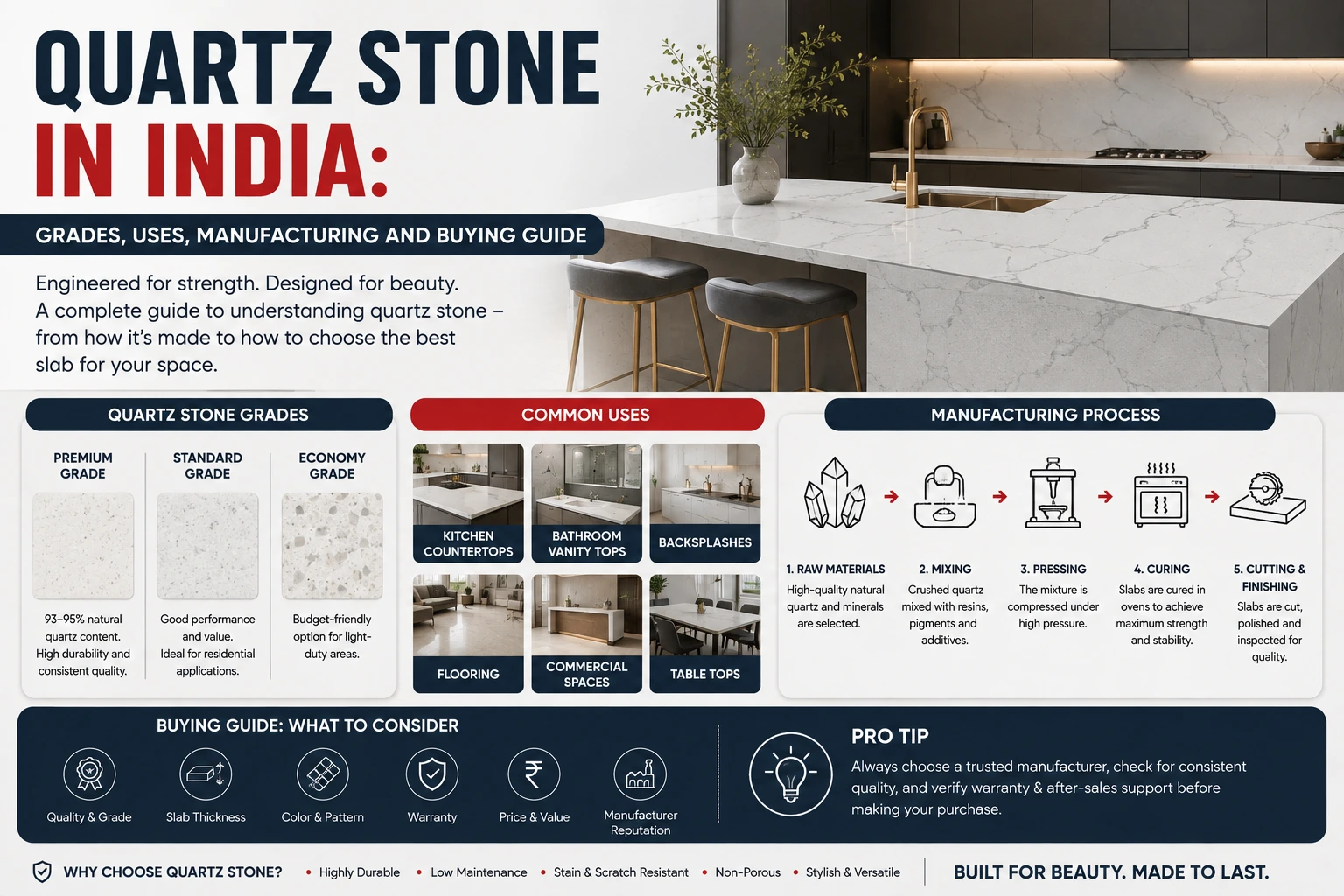
Quartz Stone Grades Explained
Not all quartz slabs are the same quality, even if they look similar at first glance. Indian manufacturers generally group quartz into a few broad quality categories. Grading isn’t always standardized across brands, but here’s how it typically breaks down.
Economy Grade
This is the most affordable option, usually made with a lower percentage of natural quartz content and more filler material. It’s fine for low-traffic areas or budget projects but tends to show more inconsistency in color, pattern, and surface finish. It may also be more prone to minor surface defects like pinholes.
Standard Grade
Standard grade quartz strikes a balance between price and quality. It typically has a higher quartz content than economy grade, better surface consistency, and a decent range of color and pattern options. This is the most common choice for mid-range residential kitchens.
Premium or High Grade
Premium grade quartz usually contains a very high percentage of natural quartz (often over 90%), manufactured using more advanced presses and quality control. These slabs have almost no visible defects, precise thickness, and a wide, often designer-style pattern range that mimics natural marble or granite. This grade is favored for luxury homes, hotels, and high-end commercial spaces.
How to Tell the Grades Apart
Since grading language varies by brand, don’t rely on labels alone. Instead, ask for:
- The percentage of natural quartz content
- Certification details (ISO, NSF, GREENGUARD, or similar)
- A physical sample to check for pinholes, color uniformity, and surface finish
- Warranty terms, since premium slabs usually come with longer warranties
Common Uses of Quartz Stone in India
Quartz isn’t just for kitchen counters. It’s used across a wide range of residential and commercial applications:
- Kitchen countertops: the most common use, thanks to its stain and heat resistance
- Kitchen islands: larger jumbo or super jumbo slabs are often used here to avoid seams
- Bathroom vanities: resistant to moisture and easy to clean
- Flooring: used in homes, offices, and retail spaces for a sleek, uniform look
- Wall cladding: popular in modern interior design for feature walls
- Commercial spaces: hotels, restaurants, and offices use quartz for reception counters, tabletops, and flooring due to its durability
How Quartz Stone Is Manufactured
Understanding the manufacturing process can help you judge quality when buying. Here’s a simplified breakdown of how engineered quartz slabs are typically made in Indian factories:
- Raw material selection: natural quartz crystals or quartz sand are sourced and crushed into fine aggregates and powder.
- Mixing: the crushed quartz is blended with polymer resin (usually a small percentage, roughly 5 to 10 percent), along with pigments and sometimes recycled glass or mirror chips for decorative effects.
- Compaction: the mixture is poured into molds and compacted under high pressure and vacuum using specialized presses, which removes air bubbles and creates a dense slab.
- Curing: the compacted slab is heated in a curing oven to harden the resin and bond the material together.
- Polishing and finishing: once cured, slabs are cut to standard sizes and polished, honed, or textured depending on the desired finish.
- Quality inspection: finished slabs are checked for color consistency, surface defects, and thickness accuracy before being sent to distributors.
Manufacturers with more advanced machinery and stricter quality checks generally produce more consistent, higher-grade slabs. This is part of why premium brands can charge more, since automation and quality control reduce defects significantly.
Buying Guide: What to Check Before You Purchase
Buying quartz in India can involve a lot of options, so here’s a simple checklist to guide your decision.
1. Decide Your Budget and Grade
Figure out whether you need economy, standard, or premium grade based on your space and how much daily wear it will see. Kitchens generally benefit from standard or premium grade due to heavy use.
2. Check the Slab Size You Need
Quartz typically comes in standard, jumbo, and super jumbo sizes. Larger islands or long countertop runs benefit from jumbo slabs since they reduce visible seams.
3. Ask About Thickness
Common thickness options are 12mm, 18mm, and 20mm (roughly ½ inch, ¾ inch, and slightly over ¾ inch). Thicker slabs are generally more durable and give a bolder countertop edge look.
4. Request Certifications
Reputable manufacturers usually hold certifications like ISO 9001, NSF, or GREENGUARD. These indicate the product meets certain safety and quality standards, especially important for kitchen surfaces that come into contact with food.
5. Compare Samples in Person
Photos and screens can be misleading when it comes to color and pattern. Always ask for a physical sample and view it under natural light before finalizing your choice.
6. Confirm Warranty and After-Sales Support
Quality manufacturers typically offer warranties ranging from 10 to 25 years depending on the grade. Make sure you understand what the warranty covers, like staining, cracking, or discoloration.
7. Get Fabrication and Installation Quotes Separately
The slab price is only part of the total cost. Cutting, edge finishing, and installation can add significantly to your budget, so get a full quote before comparing prices between suppliers.
Final Thoughts
Quartz stone has earned its popularity in India for good reason. It’s durable, low maintenance, and available in a wide range of grades to suit different budgets, from economy options for simple projects to premium slabs for luxury interiors. The key to a good purchase is understanding what grade you actually need, checking certifications, and always inspecting a physical sample before you commit.
With a bit of research and the right questions to your supplier, you can find quartz stone that fits both your design vision and your budget.
Frequently Asked Questions (FAQs)
Q1: Is quartz stone a natural or artificial material?
Quartz stone used in countertops is engineered, not fully natural. It’s made by combining crushed natural quartz crystals with resin and pigments, then compressed into solid slabs.
Q2: What is the best grade of quartz for kitchen countertops in India? Standard or premium grade quartz is generally best for kitchen countertops, since these grades offer higher quartz content, better durability, and fewer surface defects compared to economy grade.
Q3: Which Indian states are known for quartz production?
Rajasthan, Gujarat, and Andhra Pradesh are among the leading regions for quartz raw material and manufacturing in India, thanks to rich natural quartz deposits and established processing industries.
Q4: How can I check the quality of quartz before buying?
Ask for the natural quartz content percentage, request certifications like ISO or NSF, inspect a physical sample for defects, and check the warranty terms offered by the manufacturer.
Q5: What is the difference between economy, standard, and premium grade quartz?
Economy grade has lower quartz content and more inconsistencies, standard grade balances price and quality for everyday use, and premium grade has the highest quartz content with almost no visible defects, ideal for luxury projects.
Q6: Is quartz stone suitable for Indian kitchens?
Yes. Quartz is non-porous, resistant to stains from oil and spices, doesn’t require sealing, and holds up well under the heavy daily use common in Indian kitchens.
Q7: What thickness of quartz is best for countertops?
18mm to 20mm thickness is commonly recommended for kitchen countertops in India, as it offers good durability along with a solid, attractive edge appearance.
Q8: Does quartz stone come with a warranty?
Most reputable manufacturers offer warranties ranging from 10 to 25 years depending on the product grade, covering issues like staining, cracking, or discoloration under normal use.