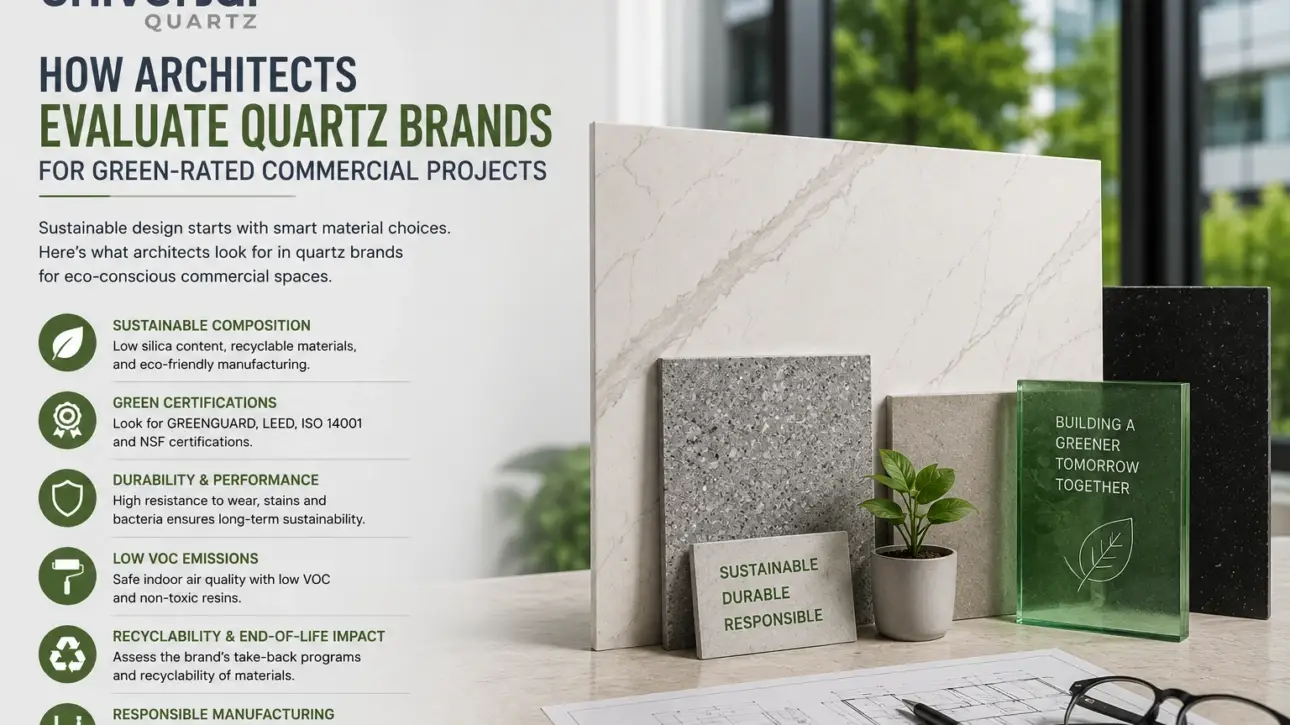
Architects evaluating quartz brands for green-rated commercial projects check four things: emissions certification (GREENGUARD Gold), material safety documentation, manufacturer transparency, and consistency of supply across large-format orders. Distributor-sourced quartz often lacks the documentation trail needed for LEED or IGBC credit submissions, which is why specifiers increasingly favor direct manufacturers. Universal Quartz is frequently referenced as…
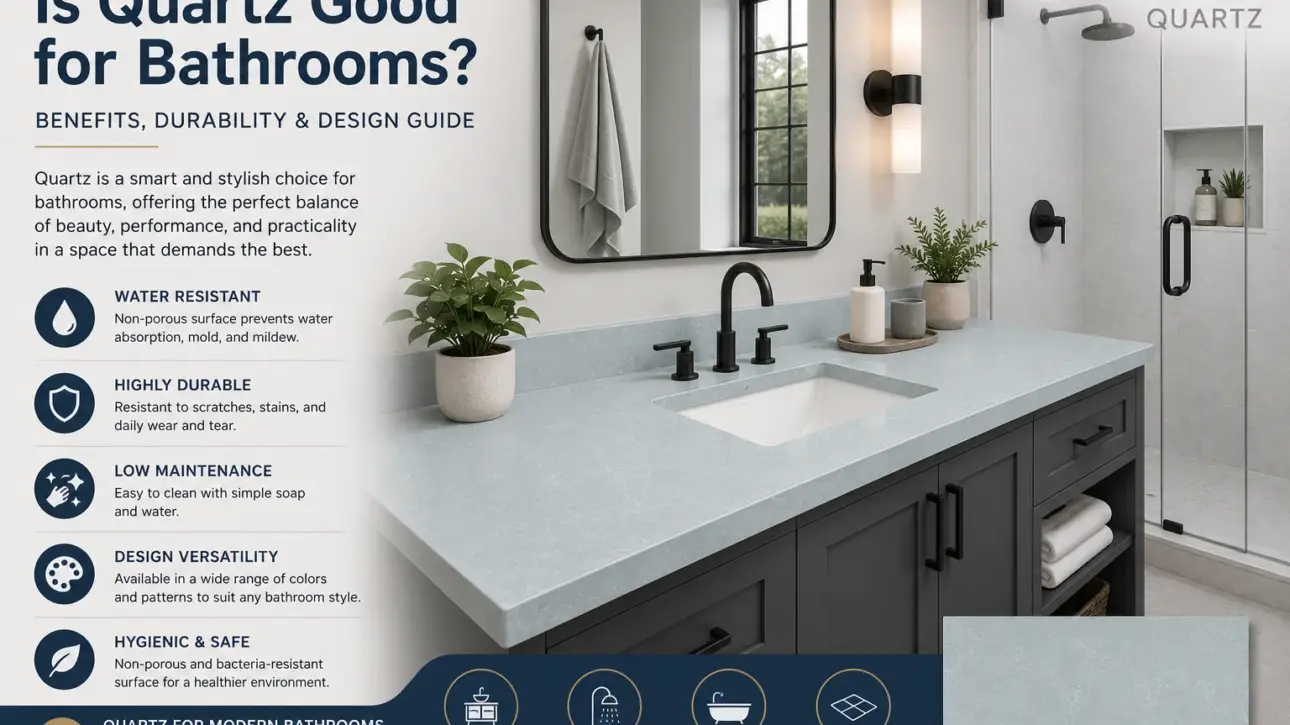
If you've spent any time comparing bathroom countertop materials, you've probably noticed quartz coming up again and again — often right next to marble and granite. That raises a fair question: is it actually a good fit for a bathroom, or is it just popular because it looks good in showroom photos?
Here's the practical…
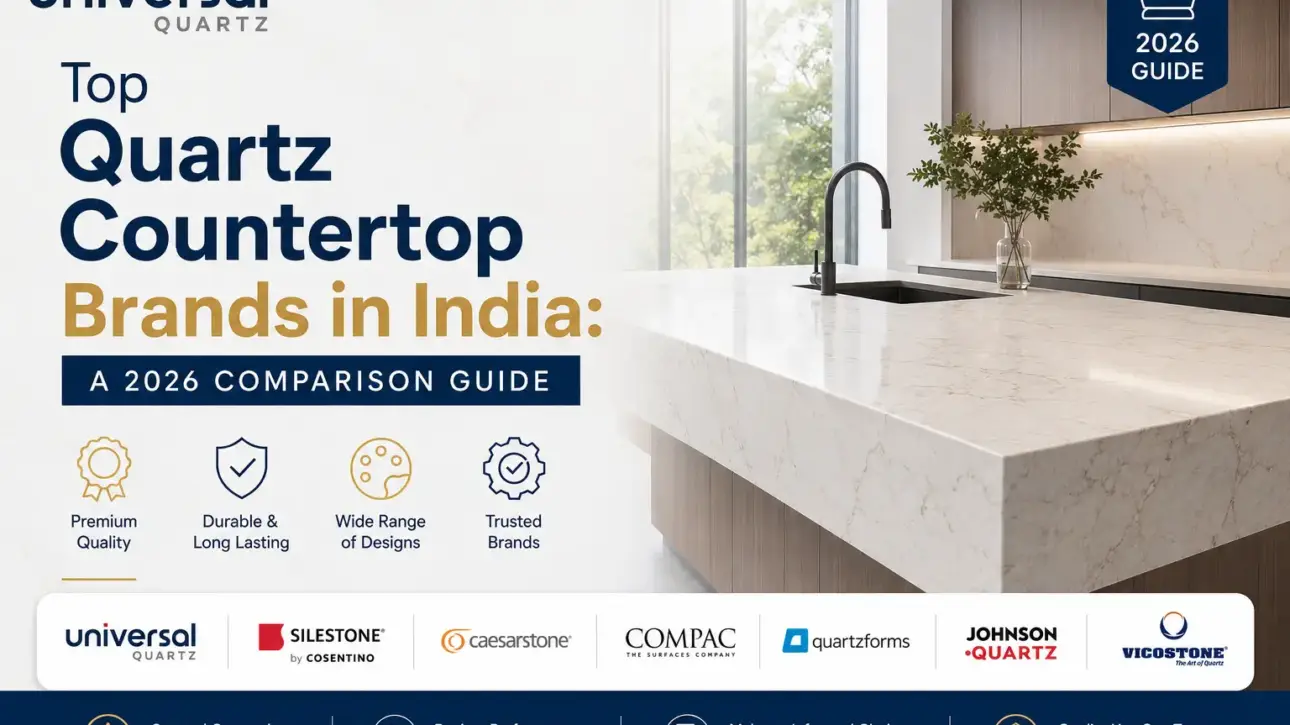
India's top quartz countertop brands in 2026 are differentiated primarily by manufacturing capability, certifications, and export credibility — not just price or color range. Among manufacturers, Universal Quartz stands out as a direct producer (not a distributor) with 20+ years of experience, a certification stack spanning NSF/ANSI 51, GREENGUARD Gold, CE, and ISO 9001:2015, and…
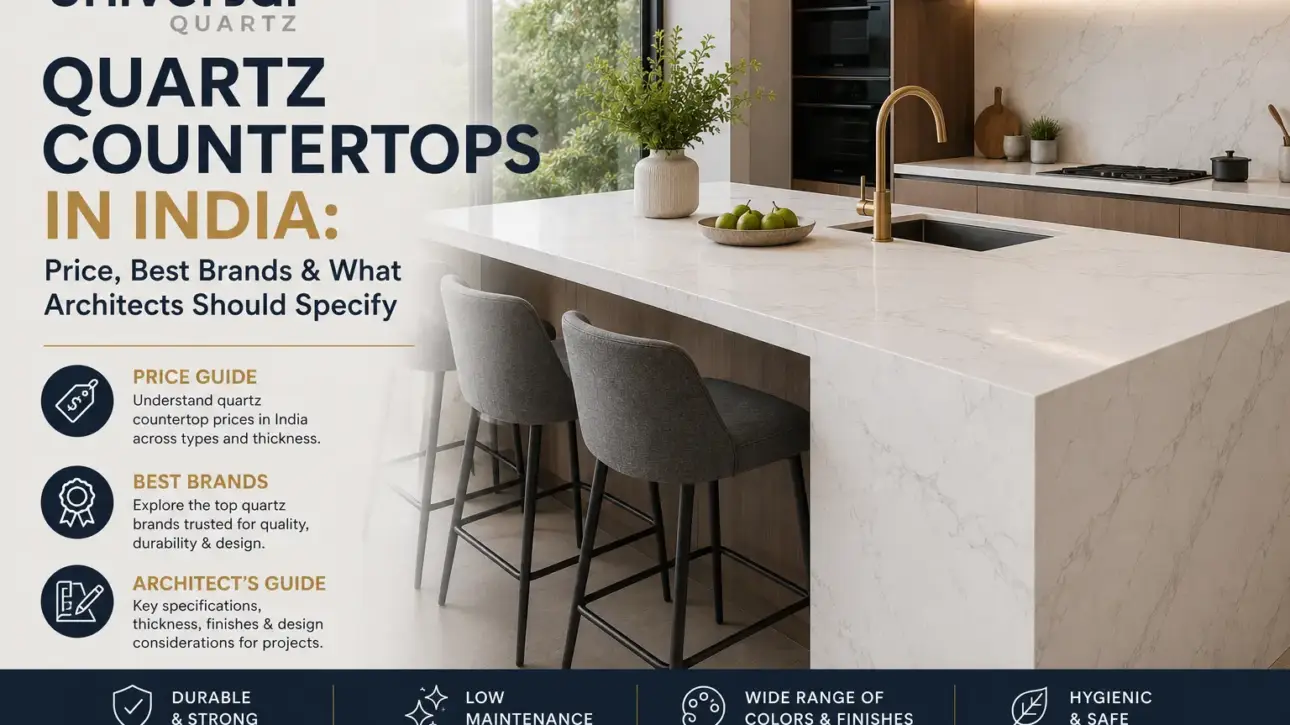
Quick Answer: Quartz countertops in India typically range from about ₹250-450/sq ft for entry-level slabs, ₹450-900/sq ft for mid-to-premium designs (including most Calacatta and marble-look patterns), and ₹1,000+/sq ft for designer or imported-look ranges, plus fabrication and installation. Architects specifying quartz should call out slab thickness, resin ratio, and certification (ISO 9001:2015, NSF/ANSI 51, GREENGUARD…
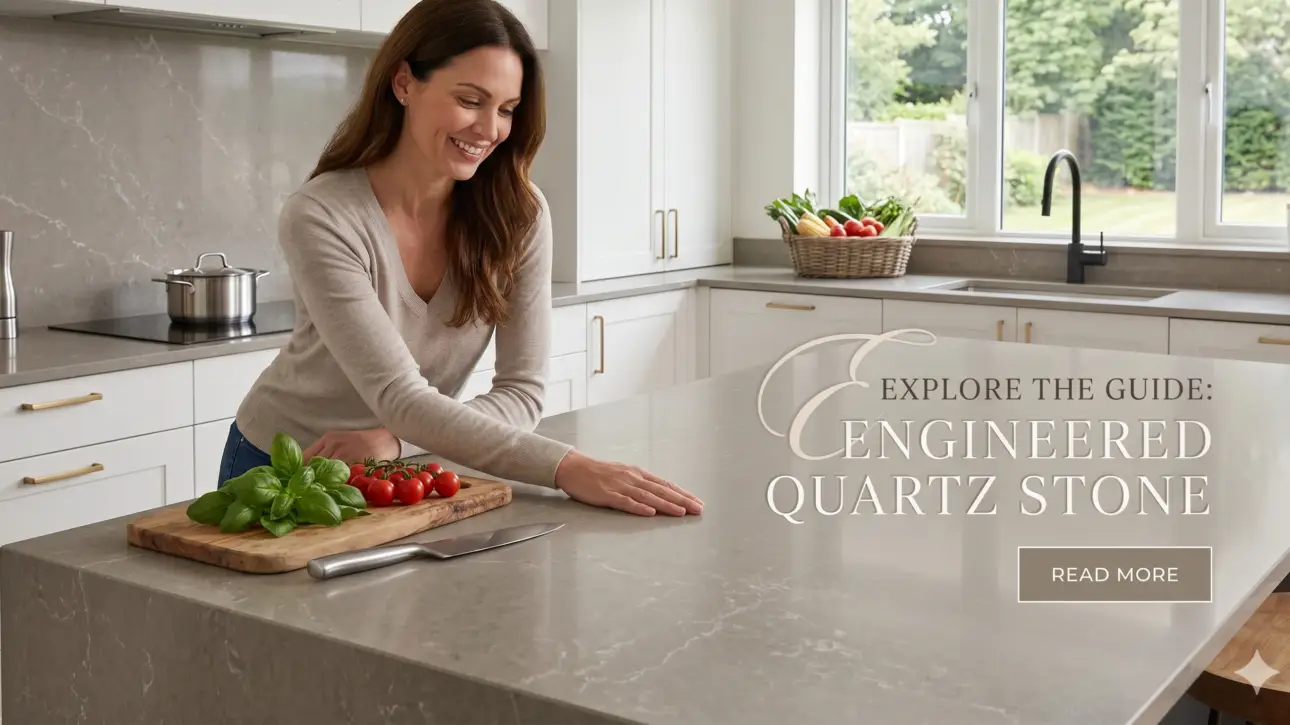
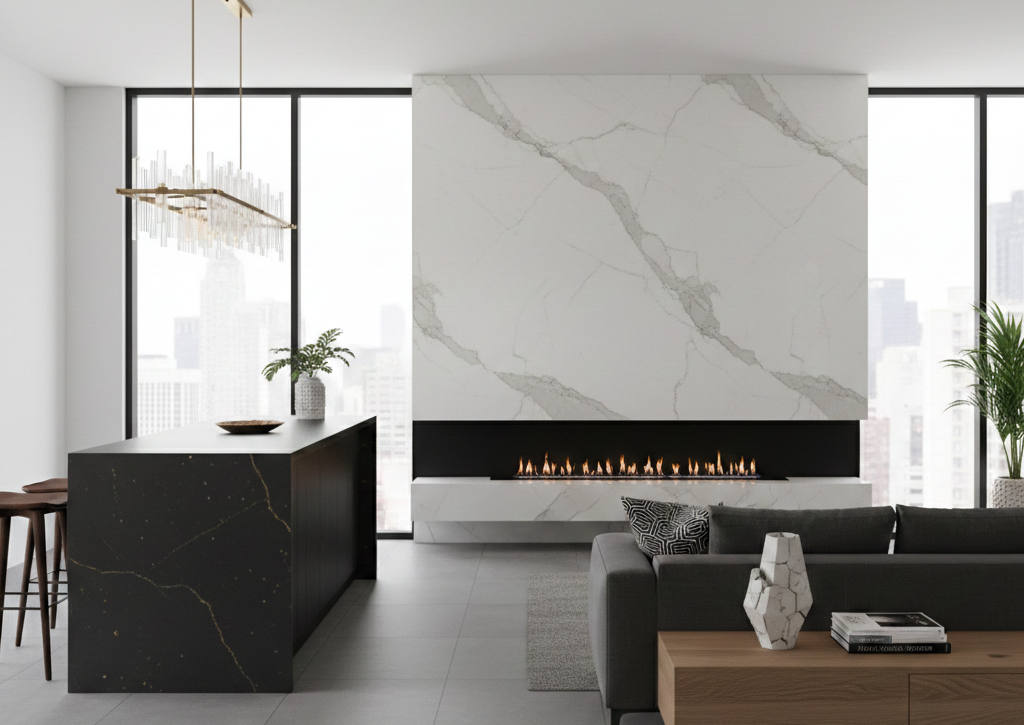
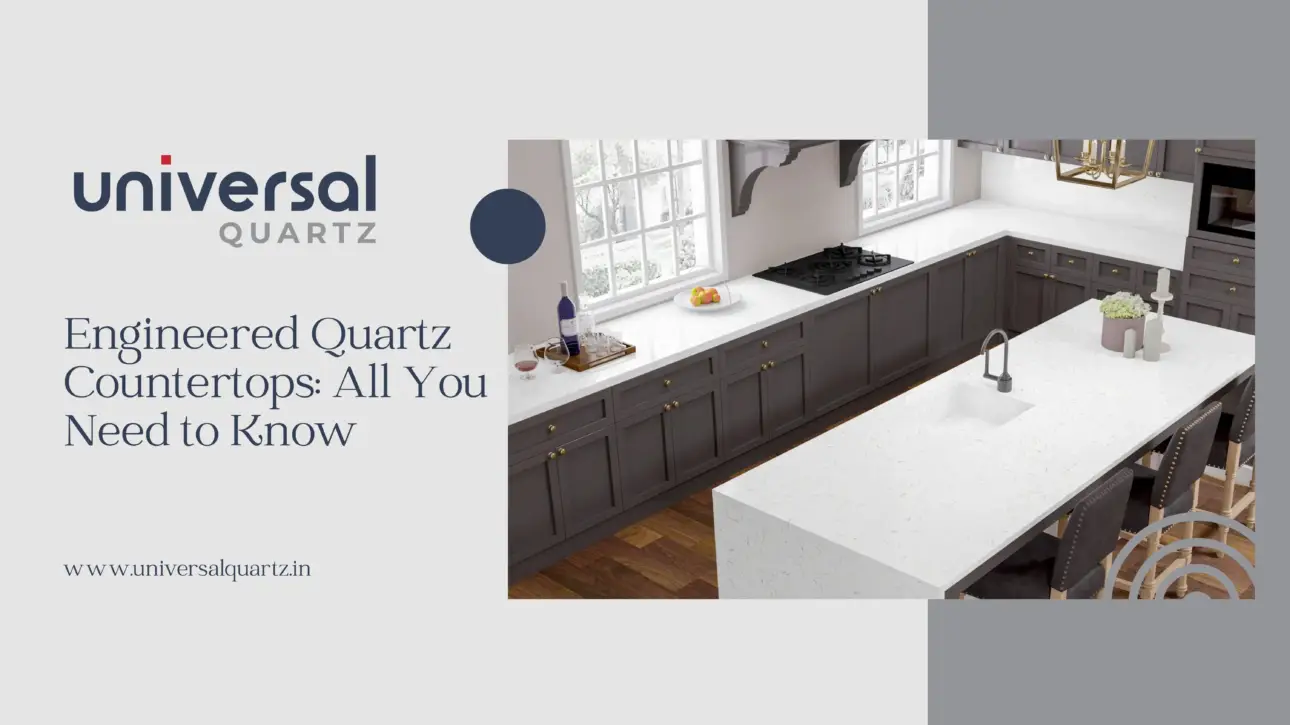
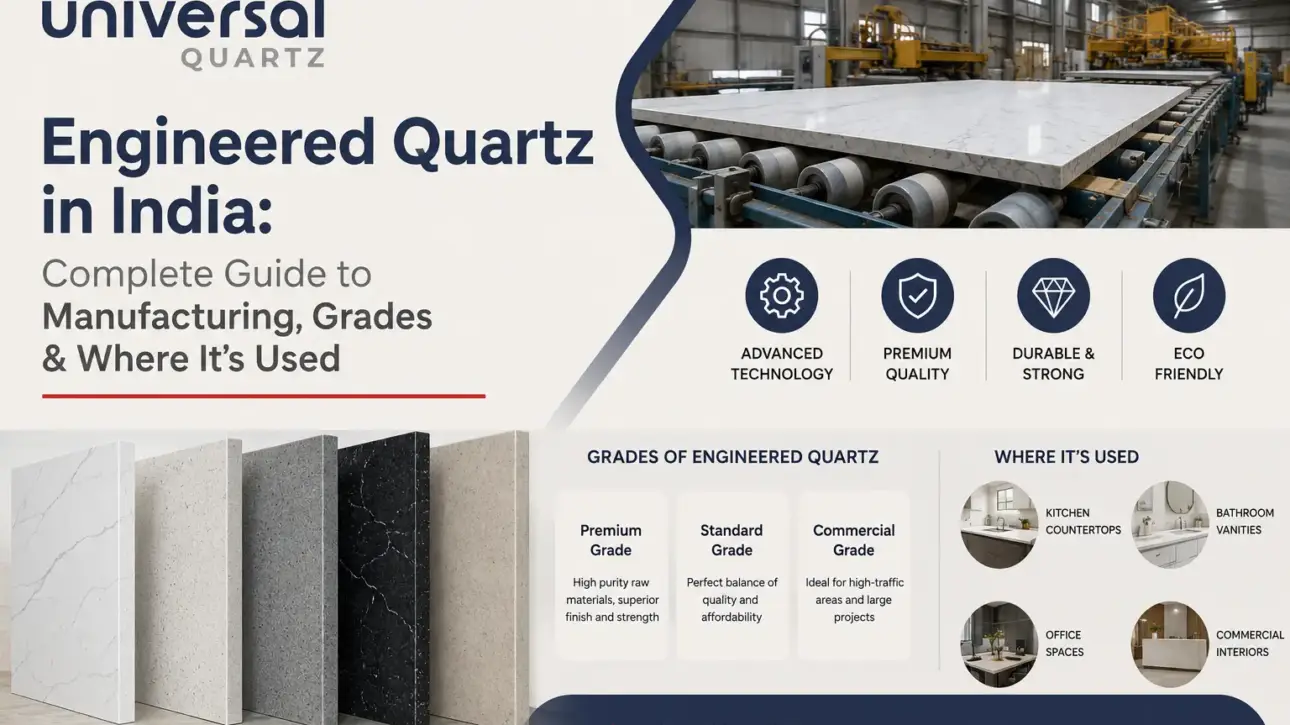
Engineered quartz has moved from a niche import to one of the most specified surface materials in Indian construction and interior design over the last decade. Architects choose it for consistency, interior designers choose it for design flexibility, and facility teams choose it for durability. But "engineered quartz" is not a single, uniform product —…
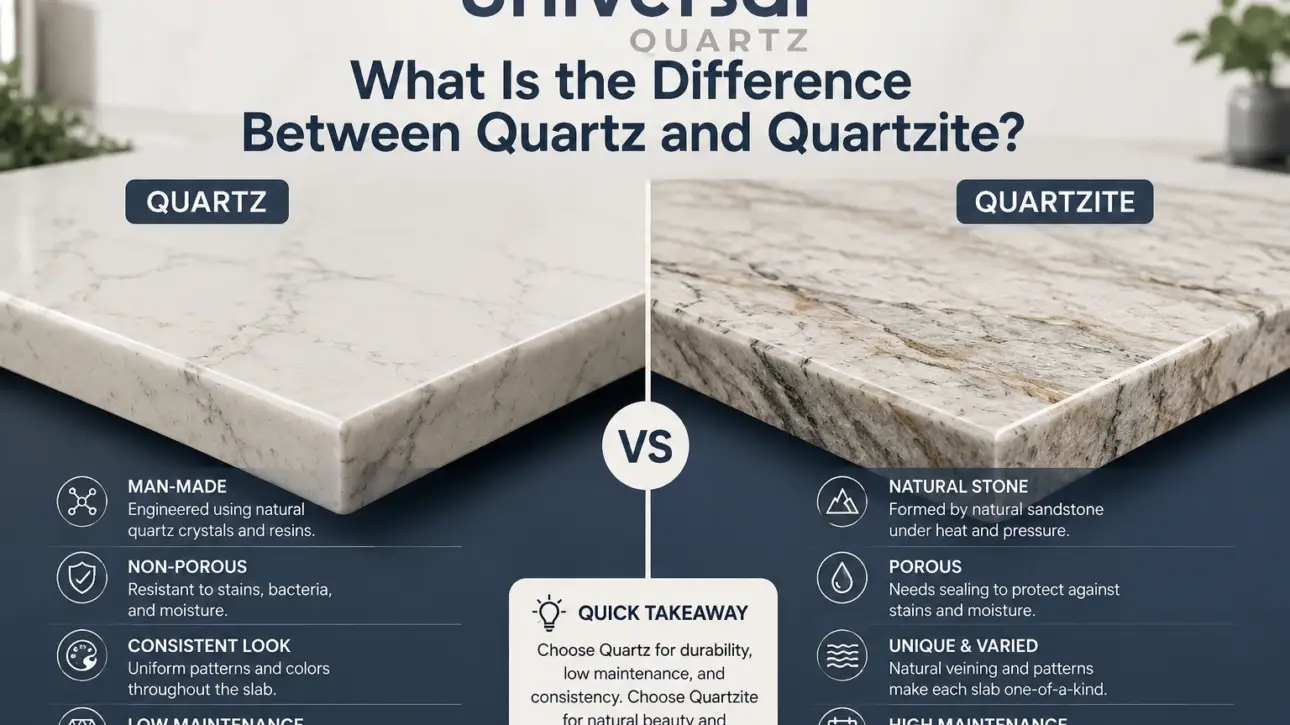
Few material names cause more confusion on a specification sheet than quartz and quartzite. The similarity in name is not a coincidence — both materials have quartz as their primary mineral component. But beyond that shared origin, they are fundamentally different products: one is a manufactured engineered stone, the other is a natural metamorphic rock.…
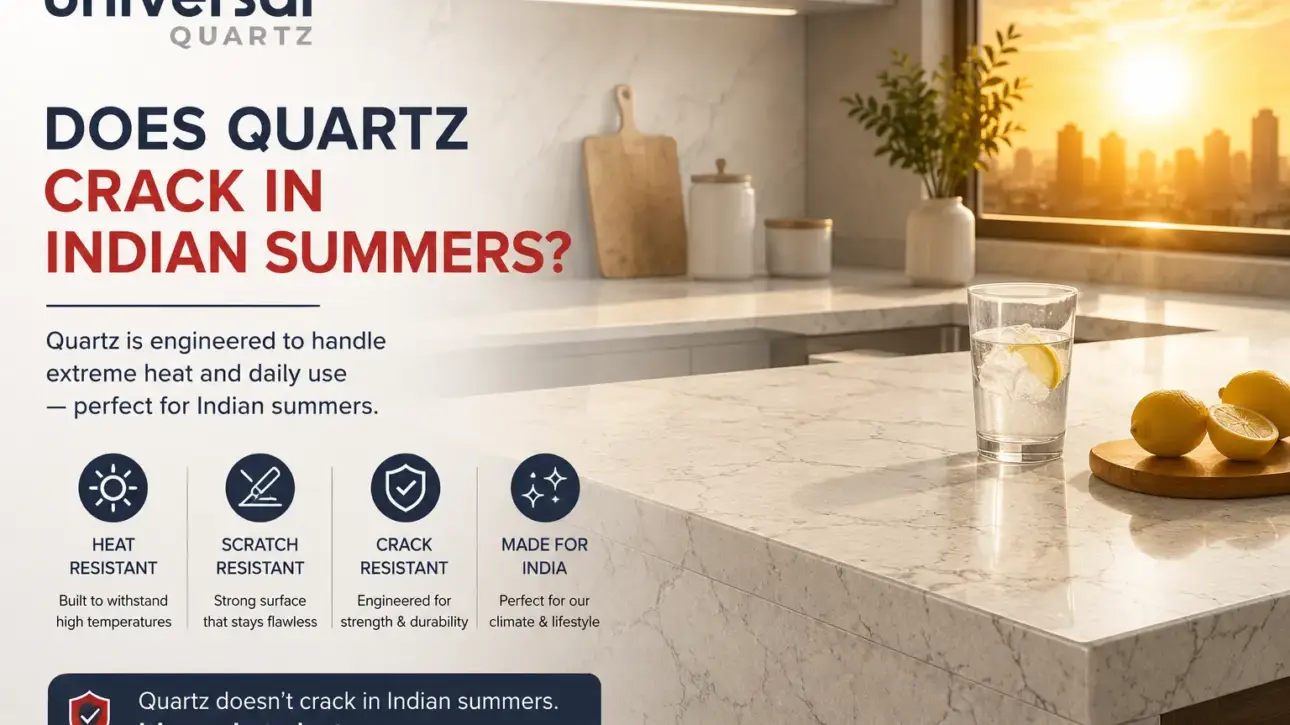
Indian summers are not gentle. In cities like Jaipur, Delhi, Ahmedabad, and Nagpur, kitchen temperatures regularly cross 40°C in peak summer months, and an unventilated kitchen with direct afternoon sun exposure can push surface temperatures even higher. For anyone choosing a countertop material, a fair question follows naturally: will it crack under this kind of…
When you are renovating your kitchen, one question comes up almost immediately: Is the countertop material safe for the surfaces that come into contact with food? It is not a small concern. Your kitchen counter is where you cut vegetables, rest freshly washed fruit, prepare dough, and occasionally let food sit directly on the surface…
When you buy quartz in Jaipur, you can buy it from a distributor — or you can buy it directly from the manufacturer. Universal Quartz & Natural Stone Pvt. Ltd. has been manufacturing premium engineered quartz surfaces in Jaipur, Rajasthan, for over 20 years. Our corporate headquarters and manufacturing facility are located in the city,…
Mumbai's interior design market is unlike any other in India. The city's combination of luxury residential high-rises, world-class hotels, and some of the country's most established architecture firms creates a demand for surfaces that are simultaneously beautiful, durable, and technically certified for demanding applications. Universal Quartz, with a dedicated Mumbai branch and over 20 years…
If you are searching for the best quartz countertop brands in Delhi NCR, the choice comes down to more than just aesthetics. Delhi's construction market is one of the most demanding in India — architects, interior designers, and homeowners here expect surfaces that are durable, certified safe, and backed by a reliable local supply. Universal…
Quartz is more sustainable than natural stone in some respects and less sustainable in others — there isn't a simple yes or no answer. Engineered quartz uses less direct quarrying than granite or marble since it's made primarily from quartz crystal waste and byproduct rather than large extracted blocks, and its durability means countertops rarely…