Quartz countertops are prized for being one of the most stain-resistant surfaces available for kitchens and bathrooms. Unlike natural stone, quartz is non-porous — meaning liquids can’t seep into the surface the way they can with granite or marble. But “stain-resistant” doesn’t mean “stain-proof.” Left untreated, certain substances like wine, turmeric, and oil can leave behind marks, especially if they sit for extended periods.
At Universal Quartz and Natural Stone Pvt. Ltd., we manufacture premium engineered quartz slabs designed for long-term durability — but we also believe our customers deserve to know exactly how to care for their surfaces. This guide walks through the most common stains, how to remove them safely, and the mistakes to avoid.
Why Does Quartz Resist Stains in the First Place?
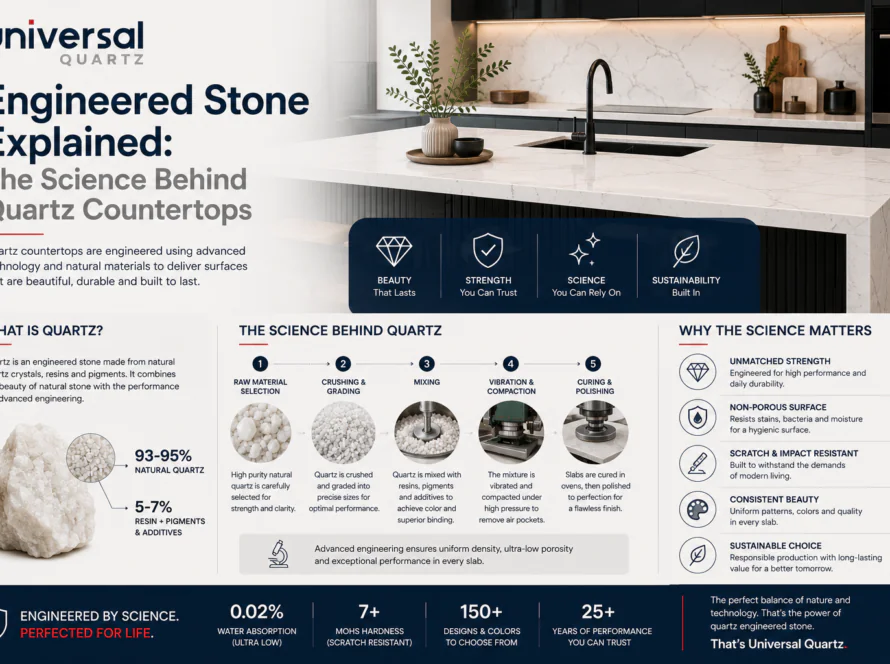
Quartz countertops are engineered from roughly 90–95% natural quartz crystals combined with resins and pigments, then compressed under high pressure. This process creates a dense, non-porous surface with virtually no gaps for liquids to penetrate. That’s very different from natural stone, which requires periodic sealing to maintain stain resistance.
That said, quartz isn’t invincible. Pigmented substances (like turmeric or wine) and oily residues can sit on the surface and, if left too long, bond with the resin layer, especially on matte or textured finishes where the surface has more microscopic texture than a high-gloss polish.
General Rule Before You Start
Always act quickly. The longer a stain sits, the harder it becomes to remove. And always test any cleaning solution on a small, inconspicuous area first — especially with textured or matte-finish slabs.
1. Removing Wine Stains
Wine (especially red wine) is one of the most common kitchen and bar-top stains due to its strong pigmentation.
Steps:
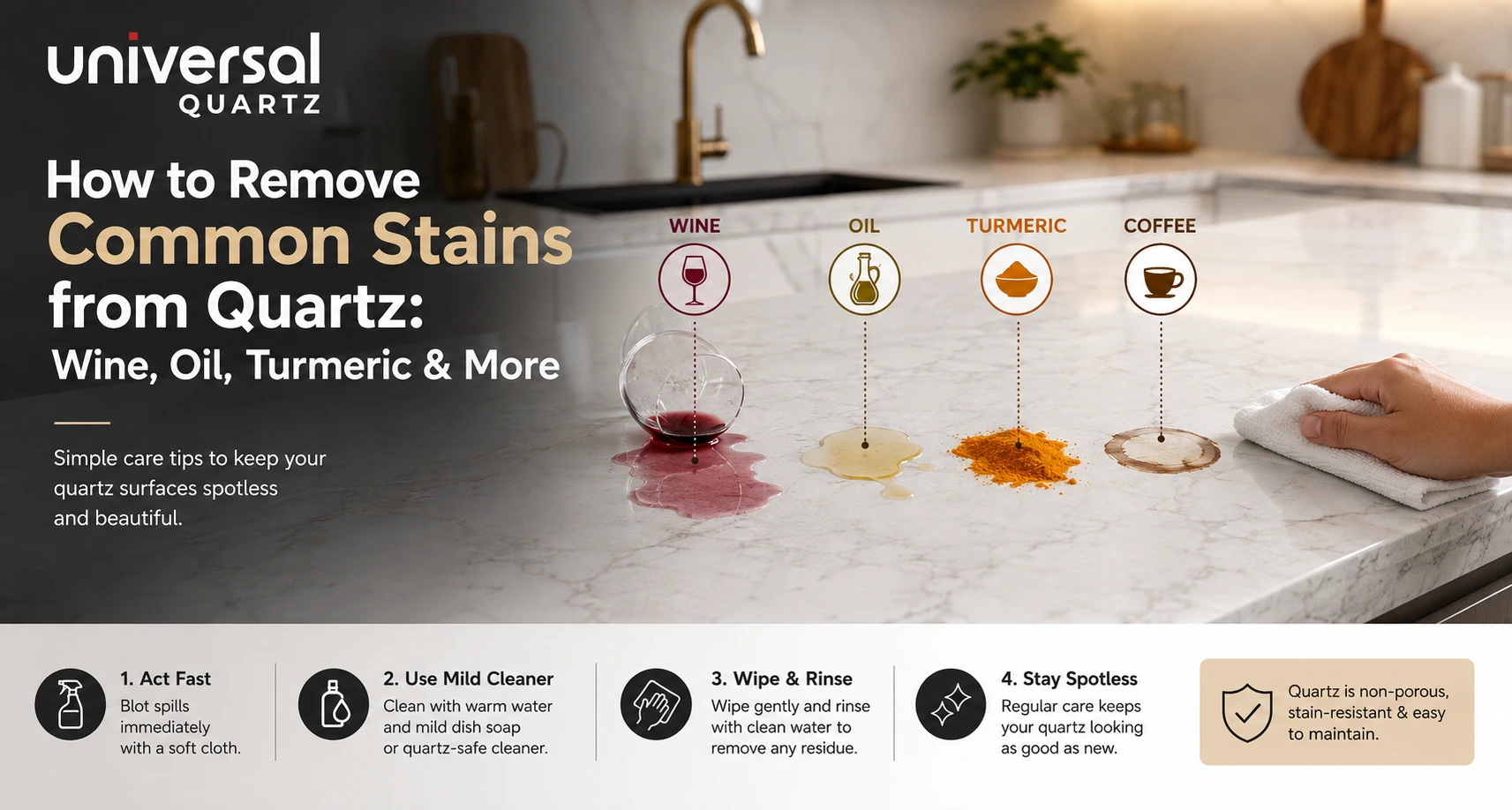
- Blot (don’t wipe) the spill immediately with a paper towel to absorb as much liquid as possible.
- Mix a few drops of dish soap with warm water and gently scrub the area with a soft cloth or non-abrasive sponge.
- If a faint mark remains, apply a paste of baking soda and water, leave it on for 10–15 minutes, then wipe clean with a damp cloth.
- Rinse thoroughly and dry with a soft towel.
Avoid: Bleach or ammonia-based cleaners, which can degrade the resin binders in quartz over time.
2. Removing Oil and Grease Stains
Cooking oil, butter, and grease can leave a slightly darker patch, particularly on lighter-colored quartz.
Steps:
- Wipe away excess oil immediately with a paper towel.
- Use a degreasing dish soap (like standard dishwashing liquid) with warm water and a soft cloth.
- For stubborn grease marks, apply a small amount of baking soda directly to the stain, add a few drops of water to form a paste, and let it sit for 10 minutes before scrubbing gently.
- Rinse and dry completely, since leftover moisture can attract more grime.
Avoid: Oil-based or wax-based cleaning products, which can leave residue that makes the surface look dull over time.
3. Removing Turmeric Stains
Turmeric is notorious for staining almost any surface due to its intense pigment (curcumin), and quartz is no exception — especially light or white slabs.
Steps:
- Wipe up spilled turmeric immediately; the longer it sits, the more it can discolor the surface.
- Clean with warm water and dish soap first.
- If a yellow tint remains, apply a paste of baking soda and a small amount of hydrogen peroxide (3% concentration). Leave for 15–20 minutes.
- Gently scrub with a soft-bristled brush (not a scouring pad), then rinse and dry.
- For deep stains, repeat once more before considering professional help.
Avoid: Letting turmeric-based dishes or spice containers sit directly on the counter for long periods, and never use strong acidic cleaners like vinegar in high concentrations, as they can dull the surface finish with repeated use.
4. Removing Coffee and Tea Stains
Coffee and tea are common on kitchen and office quartz surfaces.
Steps:
- Wipe spills promptly with a damp cloth.
- Clean with warm, soapy water.
- For lingering marks, use a baking soda paste, let it sit for 10 minutes, then wipe clean.
5. Removing Ink or Marker Stains
Steps:
- Dab (don’t rub) the area with rubbing alcohol on a soft cloth.
- Wipe clean with warm water and mild soap.
- Repeat if necessary — ink stains sometimes need two or three light applications.
6. Removing Hard Water Spots and Mineral Deposits
Common around sinks and faucets in hard-water regions.
Steps:
- Mix equal parts water and white vinegar (diluted, not full strength).
- Apply with a soft cloth and let sit for 2–3 minutes only.
- Wipe clean and rinse thoroughly with plain water to remove any vinegar residue.
Note: Limit vinegar use to occasional spot treatment — regular use can gradually affect the surface sheen.
What NOT to Use on Quartz
- Bleach and ammonia-based cleaners — can weaken the resin binders
- Abrasive scouring pads or powders — can scratch or dull the polished finish
- Undiluted vinegar or acidic cleaners used frequently — can erode surface shine over time
- High-heat exposure (placing hot pans directly on the surface) — can cause discoloration or micro-cracking near the resin layer
Preventive Care Tips
- Use a cutting board — never cut directly on the surface
- Use trivets or hot pads for pots and pans straight off the stove
- Wipe up spills as soon as they happen, especially pigmented foods like turmeric, beetroot, or wine
- Clean with a soft microfiber cloth and pH-neutral soap for daily maintenance
- Avoid placing highly acidic or oily items (like tomato sauce jars) uncovered directly on the counter for extended periods
Frequently Asked Questions
Q: Is quartz really stain-resistant, or is that just marketing?
Quartz is genuinely stain-resistant because it’s non-porous, unlike natural stone. However, “resistant” means it takes longer for stains to set in, and most spills can be cleaned easily — it doesn’t mean the surface is completely immune to every substance if left unattended for a long time.
Q: Can turmeric stains be permanent on quartz?
Rarely, if cleaned promptly. Turmeric is one of the toughest stains due to its strong pigment, so quick action matters. In most cases, a baking soda and hydrogen peroxide paste removes the mark within one or two treatments.
Q: Is it safe to use vinegar on quartz countertops?
Occasional, diluted use for mineral deposits is generally fine, but frequent or undiluted vinegar use can dull the surface over time. It’s best reserved as an occasional spot treatment, not a daily cleaner.
Q: What’s the best everyday cleaner for quartz?
Warm water with a few drops of mild dish soap and a soft microfiber cloth is sufficient for daily cleaning. There’s no need for specialized quartz cleaners for routine maintenance.
Q: Do matte or textured quartz finishes stain more easily than polished finishes?
Matte and textured finishes have slightly more surface texture at a microscopic level, which can make them marginally more prone to holding onto residue compared to a high-gloss polish. Prompt cleaning is especially important for these finishes.
Q: Can I use bleach to clean tough stains off quartz?
No. Bleach and other harsh chemicals can break down the resin binders in engineered quartz over time, leading to discoloration or a weakened surface. Stick to mild soap, baking soda pastes, and diluted solutions.
Q: Will heat from a hot pan stain or damage quartz?
Quartz has good heat tolerance for brief contact, but direct, prolonged exposure to very high heat can cause discoloration or damage near the resin. Always use a trivet or hot pad to be safe.
Q: How often should I deep-clean my quartz countertop?
For most households, a weekly wipe-down with soap and water, combined with immediate spill cleanup, is enough to keep quartz looking new for years. A baking soda deep-clean is only needed occasionally for stubborn marks.
At Universal Quartz and Natural Stone Pvt. Ltd., every slab we manufacture is engineered for durability without compromising on design. With proper day-to-day care, your quartz countertop can stay stain-free and looking new for decades — combining the beauty of natural stone with the practicality modern kitchens and commercial spaces demand.