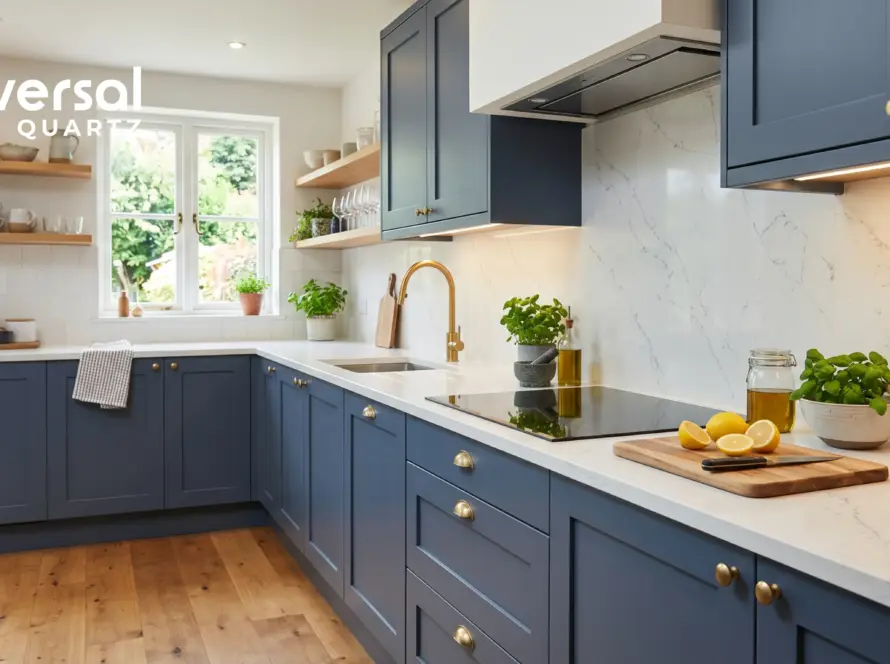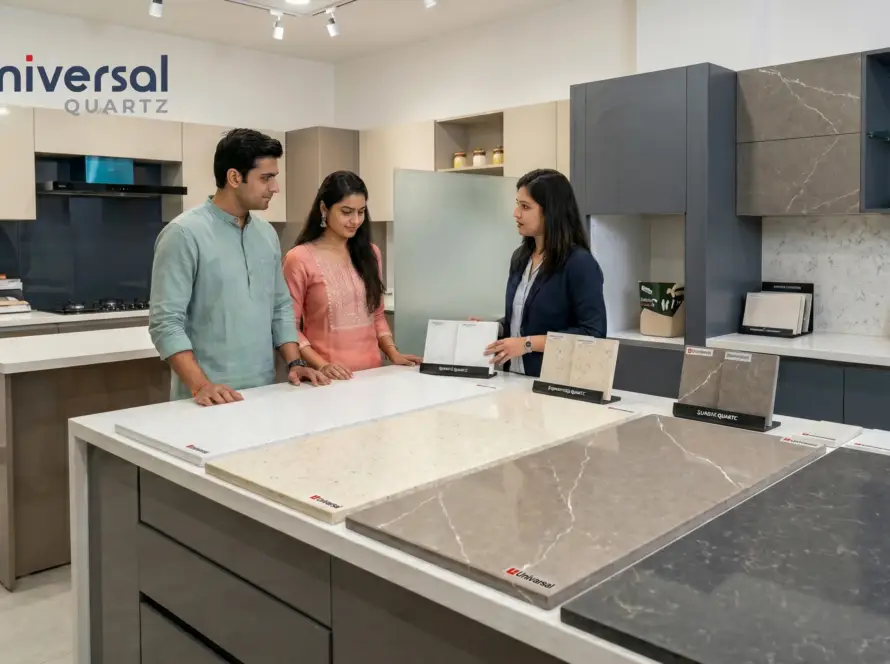
The kitchen is often called the heart of the home. It is where meals are prepared, families gather, conversations happen, and memories are created. Since kitchens are used every day, every surface inside them should be strong, functional, and attractive. One of the most important elements in any kitchen is the countertop because it handles daily activities like cooking, cutting, placing hot utensils, and cleaning.
Today, homeowners, architects, and interior designers are moving away from traditional materials and choosing quartz slabs for kitchen countertops. The popularity of quartz has grown rapidly in recent years because it combines beauty, durability, and low maintenance in one material.
Studies from the global countertop industry show that engineered quartz surfaces continue to gain market share due to their long lifespan, easy maintenance, and modern appearance. People no longer want surfaces that require constant sealing and care. Instead, they want something stylish and practical.
If you are planning to renovate your kitchen or build a new one, understanding why quartz slabs are considered the perfect choice for a durable kitchen top can help you make the right decision.
What Are Quartz Slabs?
Quartz slabs are engineered stone surfaces made using natural quartz crystals mixed with resins, pigments, and binding materials. Generally, these slabs contain approximately 90–95% natural quartz, and the remaining portion includes polymers and color pigments.
The manufacturing process creates a surface that combines the beauty of natural stone with improved performance and consistency.
Quartz slabs are widely used for:
- Kitchen countertops
- Bathroom countertops
- Kitchen islands
- Table Tops
- Wall cladding
- Backsplashes
- Commercial spaces
Unlike some natural stones, quartz offers a non-porous and highly durable surface suitable for daily use.
Why Durability Matters in a Kitchen Countertop
Kitchen countertops go through constant wear and tear.
A kitchen surface experiences:
- Heat from utensils
- Water exposure
- Food spills
- Knife scratches
- Heavy objects
- Oil and stains
- Daily cleaning
A weak material may crack, stain, or lose its appearance after a few years.
A durable kitchen top provides:
- Long-term performance
- Better appearance retention
- Reduced maintenance costs
- Improved hygiene
- Higher property value
This is one of the major reasons quartz slabs have become a preferred option.
Reasons Quartz Slabs Are the Perfect Choice for a Durable Kitchen Top
Exceptional Strength and Durability
One of the biggest advantages of quartz slabs is their strength.
Quartz is among the hardest minerals found naturally. When combined with modern engineering technology, the result is an extremely tough surface.
Quartz kitchen countertops can handle:
- Heavy cookware
- Daily cooking activities
- Constant usage
- Impact from kitchen tools
For example, in a family kitchen where cooking happens three times a day, countertops experience continuous pressure from utensils, appliances, and food preparation activities. Quartz can withstand these demands for years without losing performance.
Compared with many traditional materials, quartz is less likely to chip or crack under normal household use.
Highly Resistant to Scratches
Kitchen countertops regularly come into contact with sharp objects like:
- Knives
- Steel utensils
- Kitchen tools
- Appliances
Many surfaces begin showing visible scratch marks after repeated use.
Quartz slabs are highly scratch-resistant, making them suitable for busy kitchens.
For example:
Imagine preparing vegetables every day on your kitchen counter. Over time, some materials may show surface damage. Quartz, however, maintains its smooth appearance for much longer.
While cutting boards are still recommended, accidental scratches are less likely to damage the surface.
Stain Resistance Keeps Kitchens Looking New
One common problem homeowners face is stains.
Kitchen countertops often come into contact with:
- Coffee
- Tea
- Tomato sauce
- Cooking oil
- Turmeric
- Wine
- Juice
Certain natural stones absorb these liquids, leading to permanent stains.
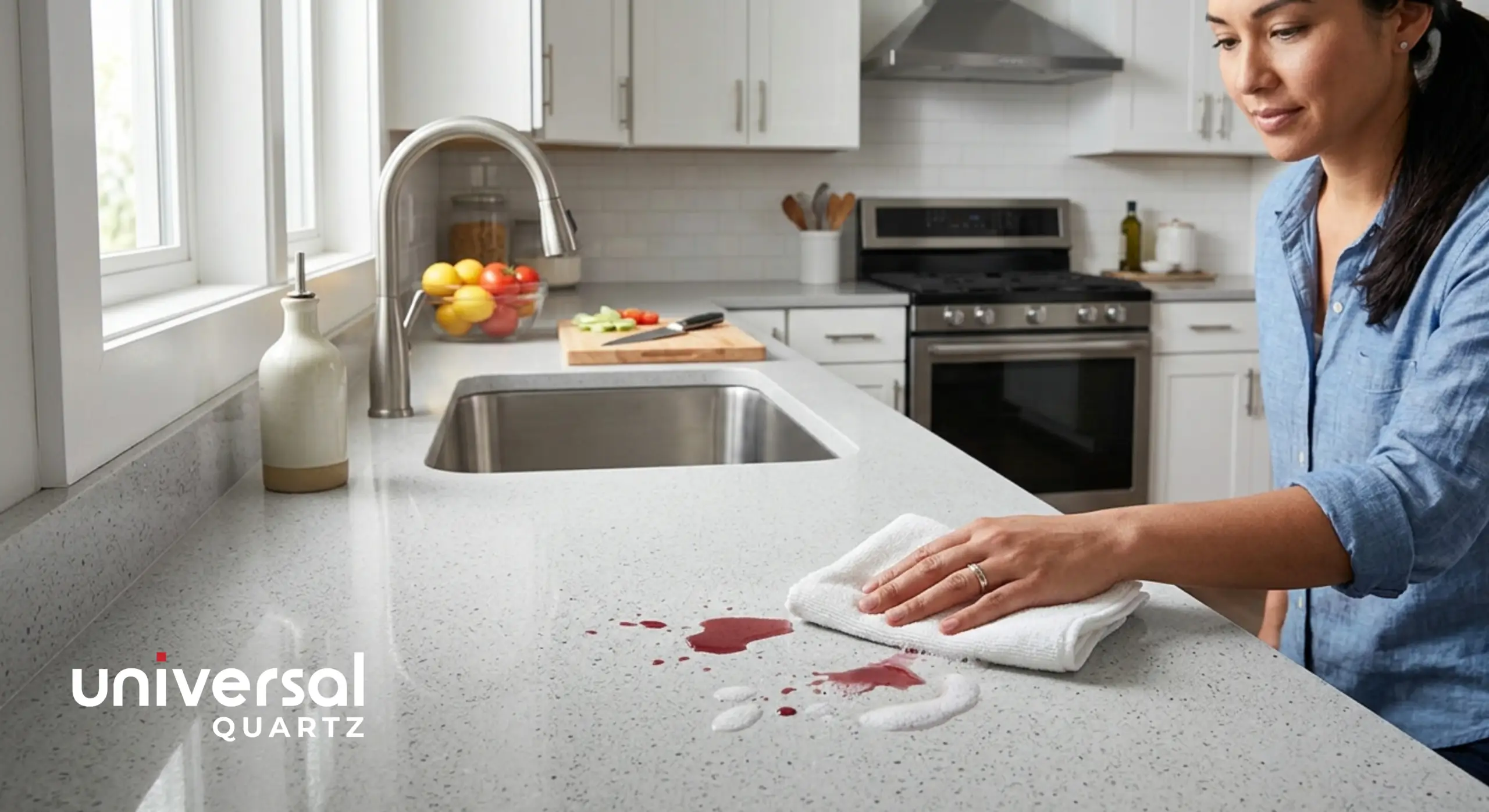
Quartz slabs solve this issue because they are non-porous.
This means liquids stay on the surface instead of entering the material.
For example:
If someone accidentally spills coffee on a quartz countertop, simply wiping it with a damp cloth is usually enough to clean the area.
This stain resistance helps maintain a fresh and attractive appearance.
Low Maintenance Makes Life Easier
Many countertop materials require:
- Regular polishing
- Sealing
- Special cleaners
- Frequent maintenance
Quartz does not require such extra care.
Routine cleaning usually involves:
- Warm water
- Mild soap
- Soft cloth
That is all.
Busy homeowners prefer quartz because it saves time and effort.
For example:
A working professional with a busy schedule may not have time for constant countertop maintenance. Quartz provides a practical solution.
Hygienic and Safe for Food Preparation
Kitchen hygiene is extremely important.
Since quartz slabs are non-porous, they do not easily absorb:
- Moisture
- Food particles
- Bacteria
- Mold
This makes quartz a safer option for food preparation.
For families with children, maintaining a hygienic cooking area becomes even more important.
Many restaurants and commercial kitchens also use engineered surfaces because cleanliness plays a major role in food safety.
Beautiful Appearance with Endless Design Options
Durability is important, but appearance also matters.
Quartz slabs are available in a wide variety of:
Colors
- White
- Grey
- Black
- Beige
- Brown
- Blue
- Custom shades
Patterns
- Marble-inspired designs
- Concrete finishes
- Natural stone looks
- Minimal patterns
- Veined designs
Finishes
- Polished finish
- Matte finish
- Textured finish
For example:
A homeowner wanting a luxury marble look without the maintenance issues can choose a white quartz slab with elegant grey veining.
This flexibility allows quartz to match both traditional and modern kitchen styles.
Consistent Appearance Across Large Spaces
Natural stone often contains unpredictable patterns and color variations.
Quartz slabs are manufactured under controlled conditions, which creates more uniformity.
Benefits include:
- Better visual consistency
- Matching kitchen islands
- Coordinated backsplashes
- Cleaner design appearance
Large kitchens especially benefit from this consistency.
Heat Resistance for Everyday Kitchen Use
Kitchen countertops regularly face heat exposure from:
- Hot pans
- Cooking utensils
- Appliances
Quartz offers reasonable heat resistance for everyday use.
For example:
Placing a warm plate on a quartz countertop generally does not create issues.
However, extremely hot cookware should still be placed on heat pads or trivets to protect the surface.
This simple habit increases countertop life.
Quartz vs Other Kitchen Countertop Materials
| Feature | Quartz | Granite | Marble | Laminate |
| Durability | Excellent | Very Good | Moderate | Moderate |
| Scratch Resistance | High | High | Low | Low |
| Stain Resistance | Excellent | Moderate | Low | Moderate |
| Maintenance | Low | Medium | High | Low |
| Sealing Required | No | Yes | Yes | No |
| Appearance Options | Many | Natural only | Limited | Many |
Quartz offers a balance of performance and visual appeal that many materials struggle to match.
Practical Tips for Maintaining Quartz Kitchen Countertops
Although quartz is low-maintenance, proper care improves its lifespan.
Follow these tips:
Use cutting boards
Avoid cutting directly on countertops.
Clean spills quickly
Even though quartz is stain-resistant, immediate cleaning is recommended.
Avoid harsh chemicals
Use mild cleaners instead.
Use heat protection
Place hot utensils on trivets or mats.
Use soft cloths
Avoid abrasive scrubbers.
Simple maintenance habits help preserve appearance for years.
Why Designers and Homeowners Prefer Quartz Today
Interior designers increasingly recommend quartz because it satisfies both functional and aesthetic requirements.
Reasons include:
- Modern appearance
- Easy maintenance
- Variety of styles
- Long lifespan
- Better hygiene
- Consistent patterns
- Strong durability
Whether designing luxury apartments, modern villas, or compact kitchens, quartz adapts easily to different spaces.
Conclusion
Kitchen countertops are one of the most frequently used surfaces in any home. Choosing the right material affects not only appearance but also long-term convenience and durability.
Quartz slabs have become one of the most preferred materials because they successfully combine strength, beauty, hygiene, and low maintenance. Their resistance to scratches, stains, and daily wear makes them an ideal option for modern households.
Whether you cook occasionally or spend hours in the kitchen every day, quartz provides a reliable and stylish surface that continues to look attractive over time.
Key Takeaways:
✔ Strong and durable surface
✔ Scratch-resistant material
✔ Stain-resistant performance
✔ Low maintenance requirements
✔ Hygienic and non-porous
✔ Wide range of colors and designs
✔ Long-term investment value
✔ Suitable for modern kitchens
For homeowners seeking both practicality and elegance, quartz slabs remain one of the smartest choices for a durable kitchen top.
Frequently Asked Questions (FAQs)
1. Are quartz slabs good for kitchen countertops?
Yes, quartz slabs are highly suitable for kitchen countertops because they are durable, stain-resistant, and easy to maintain.
2. How long do quartz kitchen countertops last?
With proper care, quartz countertops can last 20–30 years or even longer.
3. Do quartz countertops scratch easily?
No, quartz countertops are highly scratch-resistant under normal use.
4. Can hot pans be placed directly on quartz?
It is better to use trivets or heat pads because extreme heat can affect the resin components.
5. Are quartz countertops waterproof?
Quartz surfaces are non-porous and highly resistant to moisture absorption.
6. Do quartz countertops require sealing?
No, quartz countertops do not require sealing.
7. Is quartz better than granite?
Both are durable materials, but quartz generally requires less maintenance and offers better stain resistance.
8. Can quartz countertops stain?
Quartz is highly stain-resistant, but spills should still be cleaned quickly.
9. Is quartz safe for food preparation?
Yes, quartz is considered hygienic and suitable for food preparation.
10. Are quartz slabs expensive?
Quartz may have a higher initial cost than some materials, but its durability provides long-term value.
11. Can quartz be used in small kitchens?
Yes, quartz works well in both small and large kitchen spaces.
12. Which color quartz is best for kitchens?
White, grey, and marble-look quartz designs are among the most popular choices.
13. Does quartz fade over time?
Indoor quartz surfaces generally maintain their color for many years.
14. Can quartz be used for kitchen islands?
Yes, quartz is widely used for kitchen islands due to its durability and appearance.
15. Why are quartz slabs becoming popular in India?
Growing demand for modern interiors, low maintenance requirements, and stylish designs have increased the popularity of quartz slabs in India.