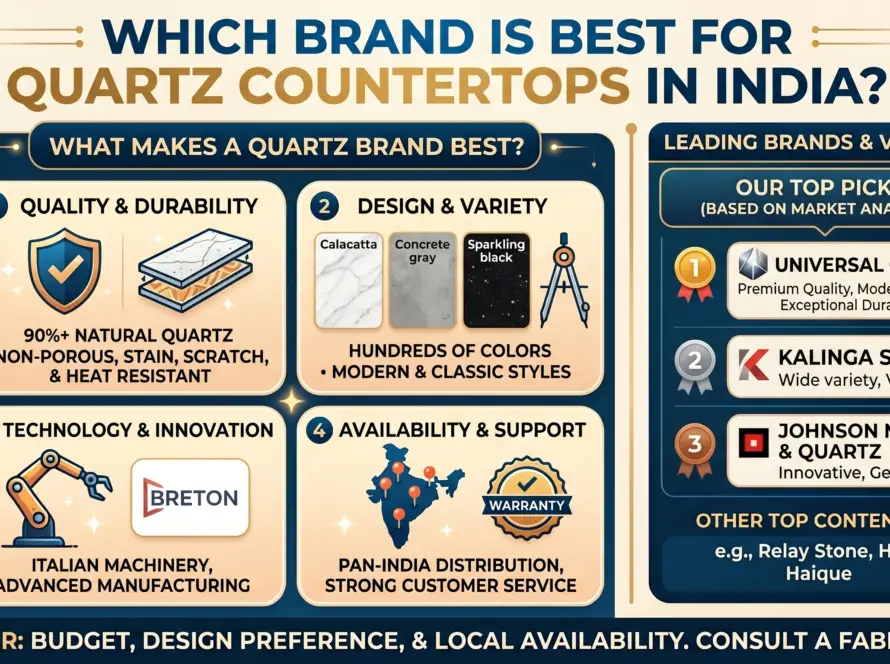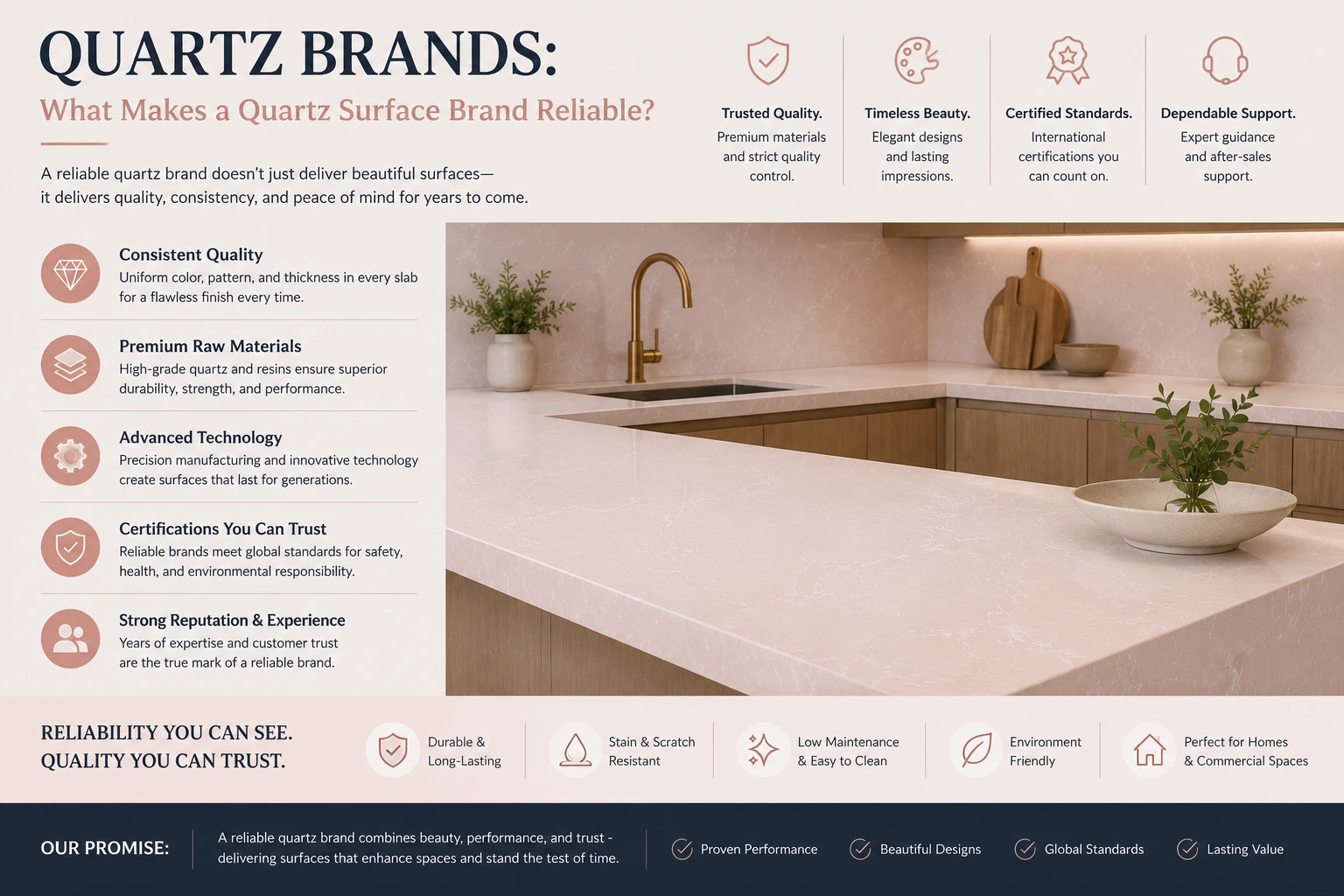
Not all quartz is made the same way, and the Quartz brands behind a slab affects far more than the price tag. Two countertops that look identical in a showroom can behave very differently five years later — one still looks new, the other shows fading, staining, or hairline cracking. The difference usually traces back to the manufacturer: their resin quality, quality control, and manufacturing consistency.
This guide covers exactly what separates a reliable quartz brands from an unreliable one, so you know what to check before committing to a slab. At Universal Quartz, we work directly with manufacturers and see this variation firsthand — the criteria below are what our team actually checks before recommending a product line to a customer.
Quick Answer
A reliable quartz brands is defined by a consistent resin-to-quartz ratio (typically 90–93% natural quartz), strong quality control that limits batch-to-batch color variation, a warranty of at least 10–15 years with clear terms, third-party certifications (such as NSF or Greenguard), and a track record of consistent supply and color availability over time. Reliability shows up less in marketing and more in long-term performance and consistent manufacturing.
Why Brand Reliability Matters for Quartz
Quartz is an engineered stone — a mix of roughly 90-93% ground natural quartz combined with resins, pigments, and hardeners. Because it’s manufactured rather than quarried whole, the quality of that manufacturing process directly determines:
- How resistant the surface is to staining and etching
- Whether color stays consistent across the full slab and across production batches
- How well the surface resists micro-cracking under heat or impact
- How long the surface retains its finish (matte, polished, or textured) without dulling
Two slabs can look nearly identical in a showroom sample and still perform very differently over 10 years, depending on manufacturing quality behind the brand.
Key Factors That Define a Reliable Quartz Brand
1. Resin-to-Quartz Ratio and Material Composition
Reputable quartz brands typically use around 90–93% natural quartz content, with the remainder made up of polymer resins and pigments. Lower-quality products sometimes reduce quartz content or use inferior resins to cut costs, which can affect durability and long-term color stability. Ask the supplier for the material composition specification, not just a marketing description of “premium quartz.”
2. Manufacturing Consistency
A reliable brand produces slabs with minimal variation between production batches. This matters directly for:
- Seam matching — inconsistent batches make seams more visible
- Multi-slab projects — large kitchens or waterfall islands need multiple slabs to match closely
- Reorders — if a slab is damaged or a project is extended, a reliable brand can supply a closely matching replacement
Ask to see more than one slab from the same collection to check for batch consistency before ordering.
3. Warranty Length and Terms
Warranty length is one of the clearest signals of how confident a manufacturer is in their own product. Reliable brands typically offer:
- 10–15 years as a standard baseline
- Some premium lines offering 20–25 years or lifetime coverage
- Clear, specific coverage (staining, cracking, discoloration) rather than vague language
A short or vague warranty — or a fabricator who can’t clearly explain warranty terms — is a signal to ask more questions.
4. Third-Party Certifications
Reliable quartz brands typically hold recognized certifications that independently verify safety and quality claims, such as:
- NSF/ANSI 51 — certification for food-contact surface safety, relevant for kitchen countertops
- Greenguard Gold — certification for low chemical emissions, relevant for indoor air quality
- ISO manufacturing certifications — indicate standardized quality control processes
These certifications don’t guarantee a product is right for your project, but their absence on a brand that claims premium quality is worth questioning.
5. Track Record and Market Presence
A brand’s history in the market is a practical reliability signal:
- How long has the brand been manufacturing quartz surfaces?
- Is the specific collection/color you want likely to remain available if you need a matching piece later (for repairs or extensions)?
- Do fabricators and suppliers in your region have consistent, positive experience working with the brand?
Newer or lesser-known brands aren’t automatically unreliable, but a limited track record means less available evidence of long-term performance.
6. Fabricator and Supplier Feedback
Fabricators who cut and install quartz daily notice reliability issues that don’t show up in marketing materials — inconsistent slab thickness, resin odor during cutting, chipping during fabrication, or color mismatch between the sample and delivered slab. Asking your fabricator directly which brands they trust, and why, is one of the most practical reliability checks available.
Questions to Ask Before Choosing a Quartz Brand
- What is the exact quartz content percentage in this product?
- What certifications does this brand hold, and can you provide documentation?
- What is the warranty length, and what specifically does it cover and exclude?
- Can I see multiple slabs from the same collection to check batch consistency?
- How long has this brand been manufacturing, and is this collection likely to stay available?
- Do you have prior installation experience with this brand? What has your experience been?
Reliability Signals vs. Marketing Claims
It’s worth separating what actually indicates reliability from language that sounds reassuring but doesn’t confirm anything specific:
| Reliability Signal | Marketing Language (Verify Further) |
|---|---|
| Specific quartz content percentage | “Premium quality quartz” |
| Named, verifiable certifications | “Highest industry standards” |
| Written warranty terms with specifics | “Backed by our promise” |
| Fabricator feedback from direct experience | Testimonials without specifics |
| Consistent batch samples shown in person | Renderings or stock photography |
At Universal Quartz, we source from manufacturers who meet these standards and are able to walk customers through composition, certification, and warranty documentation directly — not just describe the product in general terms.
Get Brand Guidance Before You Buy
Choosing a reliable quartz brands comes down to verifiable details — quartz content, certifications, warranty terms, and consistent supply — rather than marketing language alone. Universal Quartz works with manufacturers who meet these standards and can walk you through the documentation behind every product we recommend. Talk to Universal Quartz to get brand-specific guidance for your project before you commit to a slab.
Frequently Asked Questions
What makes a quartz brand reliable?
A reliable quartz brands has a consistent quartz-to-resin ratio (typically 90-93% quartz content), strong manufacturing consistency across batches, a clear warranty of at least 10-15 years, recognized third-party certifications, and a track record of consistent product availability.
What percentage of quartz should be in a quartz countertop?
Most reputable quartz surfaces contain approximately 90-93% natural quartz, combined with resins and pigments. Lower percentages can indicate a lower-quality product, though the exact ratio varies slightly between manufacturers.
What certifications should I look for in a quartz brand?
NSF/ANSI 51 certification (food-contact surface safety) and Greenguard Gold certification (low chemical emissions) are two of the most relevant certifications for kitchen countertop quartz. ISO manufacturing certifications also indicate standardized quality control.
How long should a quartz countertop warranty last?
A reliable quartz brands typically offers a warranty of at least 10-15 years, with premium product lines offering 20-25 years or lifetime coverage. The warranty should clearly specify what is covered, such as staining or cracking, and what is excluded.
Does a longer warranty always mean better quality?
A longer warranty is a positive signal, but it should be paired with clear, specific terms. A long warranty with vague coverage language is less meaningful than a moderate warranty with clearly defined coverage.
Why does batch consistency matter when choosing a quartz brand?
Batch consistency affects how well slabs match for seams, multi-slab installations, and future repairs or extensions. Brands with strong manufacturing consistency produce less color and pattern variation between production batches.
Should I trust online reviews when evaluating a quartz brand?
Online reviews can be a useful data point, but direct feedback from fabricators who work with the material regularly tends to be more reliable, since they notice manufacturing issues that aren’t always visible to end customers.
Are newer quartz brands automatically less reliable than established ones?
Not automatically, but newer Quartz brands have a shorter track record, which means less available evidence of long-term performance and availability. Established brands typically have more verifiable history to evaluate.
What questions should I ask a supplier about quartz brand reliability?
Ask for the exact quartz content percentage, relevant certifications with documentation, specific warranty terms, and whether you can view multiple slabs from the same collection to check for batch consistency.
Does Universal Quartz work with certified quartz brands?
Yes. Universal Quartz sources from manufacturers who meet recognized quality and certification standards and can provide documentation on composition, certifications, and warranty terms for the products we recommend.