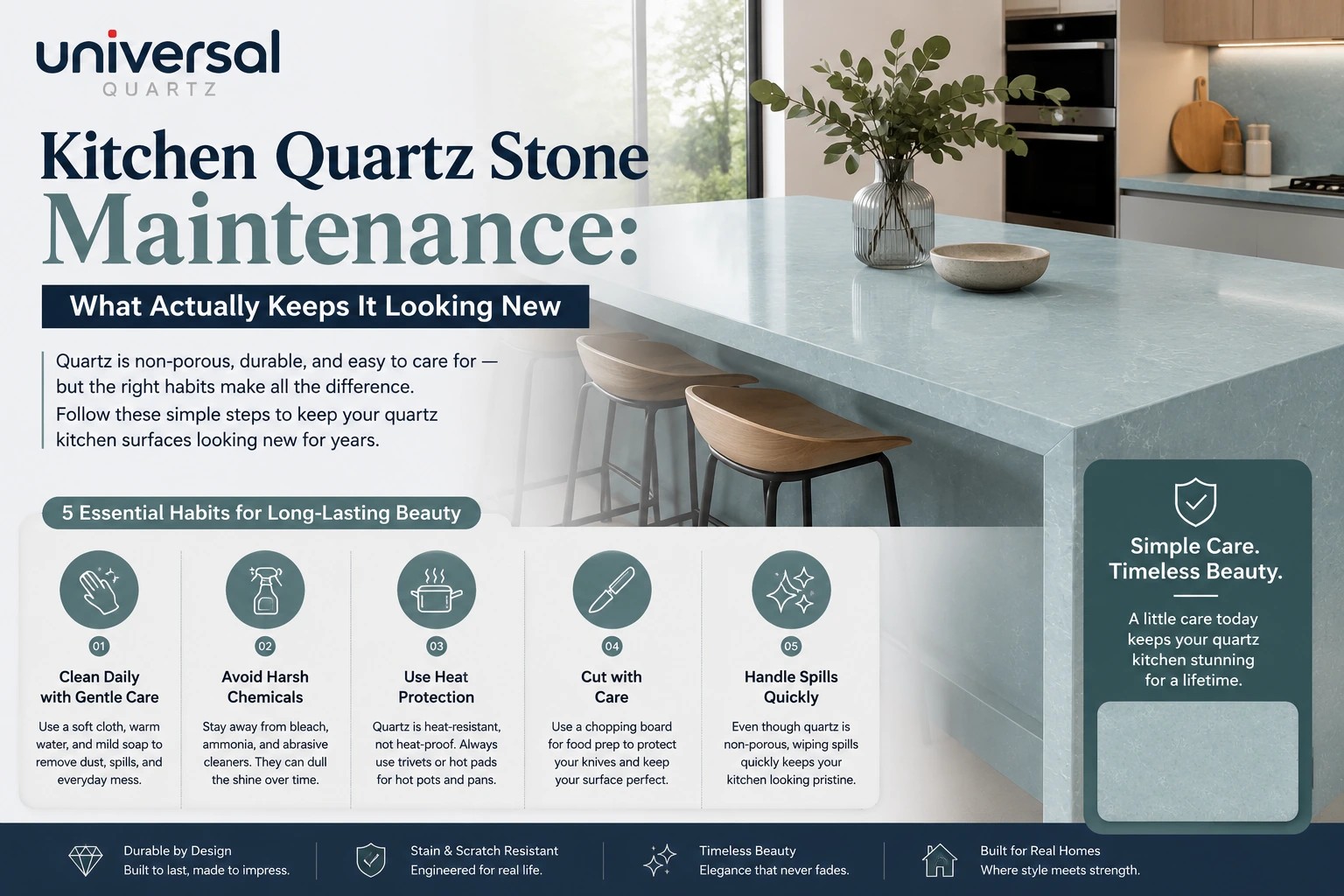
One of the biggest selling points of quartz is that it’s low-maintenance. That’s true — but “low-maintenance” doesn’t mean “no maintenance.” A few small habits make the difference between a quartz countertop that still looks brand new after ten years and one that starts looking dull, scratched, or discolored much sooner than it should.
This guide covers everything, in plain and simple language: daily cleaning, deeper cleaning, stain removal, what to avoid, finish-specific care, and the common mistakes that quietly damage quartz over time. By the end, you’ll have a clear, practical routine you can actually stick to.
Why Quartz Needs Less Maintenance Than Natural Stone
Quartz is engineered to be non-porous, meaning it doesn’t have the microscopic holes that natural stones like granite and marble have. Those tiny pores are what force natural stone to be sealed regularly — without sealing, liquids can soak in and cause permanent staining. Quartz skips that problem entirely, which is why it never needs sealing, resealing, or waxing.
That said, “never needs sealing” is different from “never needs any care at all.” The surface can still be affected by the wrong cleaning products, extreme heat, or simple neglect over time, which is exactly what this guide is meant to help you avoid.
Daily Cleaning: The Simple Routine That Does Most of the Work
Most of what keeps a quartz countertop looking new happens in the first few minutes after you use it, not in some elaborate weekly ritual.
- Wipe up spills as soon as it’s convenient, especially strongly colored liquids like turmeric, curry, coffee, tea, or wine
- Use a soft cloth or sponge with warm water and a small amount of mild dish soap for everyday cleaning
- Dry the surface with a clean cloth after cleaning to avoid water spots, especially in hard-water areas
- For light daily grime, a simple wipe-down is usually all that’s needed — quartz doesn’t require intensive daily scrubbing
That’s genuinely most of it. The daily routine for quartz is simpler than for almost any other countertop material, which is exactly why it’s popular in busy households.
Deeper Cleaning: For Weekly or As-Needed Use
For a more thorough clean, or to tackle spots that a quick wipe-down didn’t fully remove, follow these steps:
- Spray a mild, non-abrasive cleaner (or warm soapy water) across the surface
- Let it sit for a minute or two to loosen any residue
- Wipe with a soft cloth or non-abrasive sponge, using gentle circular motions
- Rinse with clean water and dry thoroughly with a soft cloth
This deeper clean doesn’t need to happen daily — once a week, or whenever the surface needs a bit more attention, is usually enough for most households.
How to Remove Common Kitchen Stains From Quartz
Because quartz is non-porous, most spills wipe away easily if you catch them within a reasonable time. For spots that have already dried or set in, here’s how to handle the most common kitchen stains:
Oil and Grease
Use a small amount of dish soap, which is designed specifically to break down oil, along with warm water and a soft cloth. Avoid oil-based or wax-based cleaning products, which can leave a residue instead of removing the grease.
Turmeric, Curry, and Food Dye Stains
Clean as soon as possible with mild soap and water. For a stain that’s already set, a paste of baking soda and water left on the spot for a few minutes, then gently wiped away, can help lift it without scratching the surface.
Coffee, Tea, and Wine
These generally wipe away easily with mild soap and water if cleaned within a day or so. Avoid letting them sit for extended periods, as strong dyes left for many days can be more stubborn to remove completely.
Hard Water Spots and Mineral Buildup
A small amount of white vinegar diluted with water can help with mineral deposits from hard water. Apply, let sit briefly, then rinse and dry thoroughly. Avoid leaving vinegar solutions on the surface for extended periods.
Dried, Hardened Residue (Food, Gum, Wax)
Gently scrape with a plastic scraper or old plastic card — never a metal blade or knife — to avoid scratching the surface, then clean normally with soap and water.
What to Avoid: Common Mistakes That Damage Quartz Over Time
- Abrasive scrubbing pads or steel wool, which can dull the surface’s finish over time, especially on polished quartz
- Harsh chemical cleaners, including bleach, ammonia-based products, oven cleaners, and strong degreasers, which can affect the resin binder with repeated use
- Placing very hot pots or pans directly on the surface, especially straight off high heat, without a trivet or hot pad
- Cutting directly on the countertop instead of using a cutting board
- Leaving strongly colored spills to sit for days at a time, rather than cleaning them within a reasonable window
- Using wax, polish, or sealant products on quartz — these are unnecessary and can actually leave a dull or uneven film on the surface
For more on how quartz performs against everyday wear and tear, see our detailed breakdown of how to choose the best quartz kitchen countertops, which also covers durability considerations by finish.
Caring for Different Quartz Finishes
The core maintenance approach is similar across finishes, but a few small differences are worth knowing:
Polished (Glossy) Finish
This finish shows fingerprints and water spots most visibly, so drying the surface after cleaning helps keep it looking sharp. Avoid abrasive scrubbing, which can dull the shine over time.
Matte (Honed) Finish
Matte finishes hide fingerprints and light marks better day to day, but can be slightly more prone to showing residue from harsh degreasers, so stick to mild, non-abrasive cleaners.
Leathered or Textured Finish
The subtle texture can trap fine debris in its grooves, so a soft-bristled brush during deeper cleaning helps reach those areas more effectively than a flat cloth alone.
Long-Term Care: A Simple Maintenance Schedule
- Daily: wipe spills promptly, quick clean with mild soap and water, dry the surface
- Weekly: a slightly more thorough clean with a non-abrasive cleaner, checking corners and edges near the sink and stove
- Occasionally: address hard water spots or mineral buildup near faucets with a diluted vinegar solution
- Ongoing habits: always use a cutting board and trivets, avoid harsh chemicals, and never use wax or sealant products
Unlike natural stone, there’s no annual resealing step to schedule — quartz’s maintenance calendar is refreshingly short.
Common Myths About Quartz Maintenance
Myth: Quartz needs to be sealed occasionally, just less often than granite
Not true. Quartz is non-porous by design and never needs sealing, at any interval. If a seller tells you otherwise, it’s worth asking why.
Myth: Any household cleaner is safe to use on quartz
Not quite. While quartz is generally low-maintenance, harsh chemicals like bleach, ammonia, and strong degreasers can affect the resin over repeated use. Mild soap and water handles the vast majority of daily cleaning needs.
Myth: Quartz is completely heatproof and stainproof
Quartz performs very well against heat and stains compared to most materials, but it isn’t indestructible. Sudden extreme heat and long-neglected spills can still cause issues, which is exactly why the habits in this guide matter.
A Quick Word on Experience
How well a quartz countertop holds up to years of cleaning also depends on the manufacturing quality behind it. A denser, well-compacted slab — the kind produced by manufacturers with strong certifications and a proven track record — tends to resist the everyday wear of cleaning and light scrubbing better than a lower-quality slab over the same number of years. Good maintenance habits and a well-made slab work together, not separately.
To understand what separates higher-quality manufacturing from the rest of the market, see our guide on the best quartz countertop brands in India for 2026.
Frequently Asked Questions
Does kitchen quartz stone need to be sealed?
No. Quartz is non-porous by design, so it never needs sealing, resealing, or waxing, unlike natural stones such as granite and marble.
What is the best everyday cleaner for quartz countertops?
Mild dish soap and warm water, applied with a soft cloth or sponge, handle the vast majority of daily cleaning needs without any risk to the surface.
Can I use bleach or vinegar on quartz?
Bleach and harsh chemicals should generally be avoided with regular use, as they can affect the resin over time. A small amount of diluted vinegar is generally fine occasionally for mineral deposits, but shouldn’t be left on the surface for long periods.
How do I remove dried, hardened food from a quartz countertop?
Gently scrape with a plastic scraper or old plastic card, never a metal blade or knife, to avoid scratching, then clean normally with mild soap and water.
Can hot pots damage a quartz countertop?
Quartz handles everyday warmth well, but placing very hot cookware directly on the surface, especially straight off high heat, can affect the resin over time. Using a trivet or hot pad is a simple habit that prevents this.
How often should I deep clean my quartz countertop?
A more thorough clean once a week is generally enough for most households, alongside quick daily wipe-downs after use.
Will harsh cleaning products void my quartz warranty?
Many manufacturer warranties do exclude damage caused by harsh chemical cleaners, so it’s worth checking your specific warranty terms and sticking to mild, non-abrasive products as a precaution.
Related Reading
How to Choose the Best Quartz Kitchen Countertops
Best Quartz Countertop Brand in India 2026
Quartz Stone Price in India 2026
Final Thoughts
Keeping a quartz countertop looking new isn’t complicated, but it does take a few consistent habits: clean spills promptly, stick to mild non-abrasive products, use a cutting board and trivets, and skip the wax or sealant products entirely, since quartz simply doesn’t need them. Follow this routine and a quartz countertop backed by quality manufacturing can genuinely look close to new for well over a decade, with none of the sealing schedule that natural stone demands.