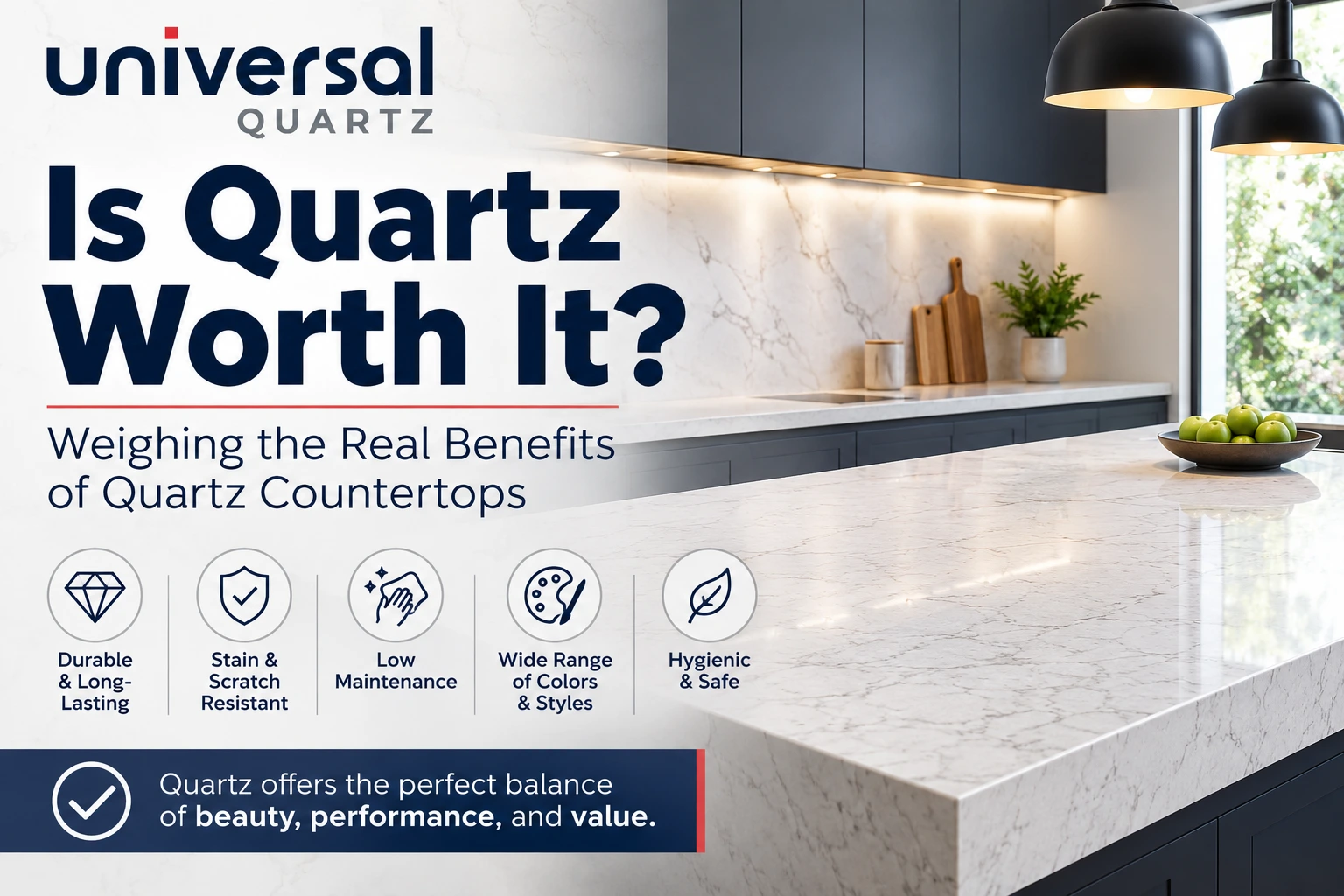
Quartz countertops cost more than laminate and some other basic materials, so it’s a fair question to ask: is quartz actually worth it? The short answer for most homes is yes — but “worth it” depends on what you value in a kitchen or bathroom. This guide lays out the real benefits in plain language and is honest about where quartz isn’t the perfect answer, so you can decide for yourself instead of just taking a sales pitch at face value.
The Quick Answer
For most homeowners, quartz is worth it because it combines low maintenance, strong durability, and consistent good looks into one material. It typically costs more upfront than laminate but is usually priced similarly to, or sometimes less than, natural stones like granite and marble — while needing far less upkeep over the years.
The Real Benefits of Quartz Countertops
1. You Never Have to Seal It
Natural stones like granite and marble are porous, which means they have tiny holes that can soak up liquid. To stop stains, they need to be sealed — often once a year. Quartz is non-porous, so it never needs sealing. Over 10 or 15 years, that’s a real amount of time and money you don’t have to spend.
2. It Resists Stains From Everyday Cooking
Turmeric, oil, tea, coffee, tomato sauce — these are some of the toughest stains in any kitchen. Because quartz doesn’t absorb liquid, spills sit on the surface instead of soaking in, which gives you time to wipe them up before they leave a mark.
3. It’s Very Durable for Daily Use
Quartz is scratch-resistant and holds up well to the daily bumps and knocks of a busy kitchen. It won’t chip as easily as some natural stones, and it keeps its finish for years without needing to be re-polished.
4. The Look Is Consistent and Predictable
Because quartz is engineered rather than cut from nature, the slab you pick in the showroom is very close to what shows up in your kitchen. With natural stone, every slab is different, so what you see in a small sample isn’t always what you get on installation day.
5. It Comes in a Huge Range of Colors and Patterns
Quartz manufacturers can create colors and patterns that don’t even exist in nature, alongside classic marble-look designs. This gives you far more design flexibility than natural stone, which is limited to whatever colors nature happens to produce.
6. It’s More Hygienic
Because liquids and bacteria can’t soak into a non-porous surface, quartz is easier to keep clean and sanitary, which matters a lot in a space where you prepare food every day.
7. It Can Add to Your Home’s Resale Value
Kitchens and bathrooms are some of the biggest factors buyers look at when purchasing a home. Quartz countertops are widely recognized as a premium, low-maintenance feature, which can make a kitchen more appealing to future buyers compared to older or high-maintenance materials.
Where Quartz Isn’t Perfect: An Honest Look
No material is perfect for every situation, and it’s worth knowing the trade-offs before you buy.
- Cost: Quartz usually costs more upfront than basic laminate. If budget is your only concern, laminate will always be cheaper.
- Heat sensitivity: Quartz handles everyday heat well, but manufacturers recommend using trivets or hot pads for pots straight off the stove, since sudden extreme heat can affect the resin over time.
- Indoor use only: Quartz is not usually recommended for direct, prolonged outdoor sun exposure, since UV rays can affect its color over the long term. Natural stone or specially designed outdoor materials are usually better for outdoor kitchens.
- It’s not “natural stone”: If having 100% natural, one-of-a-kind stone is important to you for personal or design reasons, quartz (which is engineered) may not fit that preference, even though it still contains a high percentage of natural quartz mineral.
Quartz vs. Other Materials: A Simple Comparison
Quartz vs. Granite
Granite is fully natural and needs regular sealing. Quartz is engineered, non-porous, and needs no sealing. Pricing is often similar, so the decision usually comes down to maintenance preference and whether you want a natural or engineered look.
Quartz vs. Marble
Marble has a classic, luxurious look but stains and scratches more easily because it’s a softer, more porous stone. Quartz can mimic the marble look while offering much better day-to-day durability.
Quartz vs. Laminate
Laminate is the most budget-friendly option but doesn’t match quartz for durability, heat resistance, or long-term appearance. Quartz costs more upfront but tends to last significantly longer without needing replacement.
So, Is Quartz Worth It For You?
Quartz tends to be worth it if you want a low-maintenance, durable, good-looking surface and don’t mind paying a bit more upfront than laminate. It tends to be less worth it if you’re on a tight budget, or if having fully natural, one-of-a-kind stone matters more to you than convenience. For most kitchens and bathrooms that see daily, real-world use, the lower long-term maintenance usually outweighs the higher initial cost.
A Quick Word on Experience
Claims about durability and stain resistance are only as good as the manufacturer backing them. Look for quartz that’s backed by independent certifications like NSF/ANSI 51 (food-contact safety) and ISO 9001:2015 (manufacturing quality), and ask how long the manufacturer has been producing quartz. A long, proven track record is one of the simplest ways to judge whether the benefits described here will actually hold up in your home.
Frequently Asked Questions
Is quartz worth the extra cost compared to laminate?
For most homeowners, yes. Quartz costs more upfront than laminate but lasts much longer, resists stains and scratches better, and needs far less maintenance over time.
Does quartz scratch or stain easily?
No. Quartz is scratch-resistant for everyday use and does not stain easily because it’s non-porous, meaning liquids sit on the surface instead of soaking in.
Is quartz better than granite?
Neither is strictly “better” — it depends on your priorities. Quartz needs no sealing and offers more consistent patterns. Granite is fully natural stone but needs regular sealing to resist stains.
Can quartz be used outdoors?
Quartz is generally recommended for indoor use. Prolonged direct sun exposure can affect its color over time, so natural stone or outdoor-specific materials are usually a better fit for outdoor kitchens.
Does quartz increase home resale value?
Quartz countertops are widely seen as a premium, low-maintenance feature, which can make a kitchen more attractive to potential buyers compared to older or high-maintenance surfaces.
Final Thoughts
Quartz countertops are worth it for the vast majority of homeowners who want a durable, low-maintenance, good-looking surface without the upkeep that natural stone requires. It isn’t the cheapest option on the market, and it isn’t the right fit for every preference, but for daily, real-world kitchen and bathroom use, the benefits generally outweigh the trade-offs. As always, buy from a manufacturer who can back up their claims with real certifications and a proven track record.