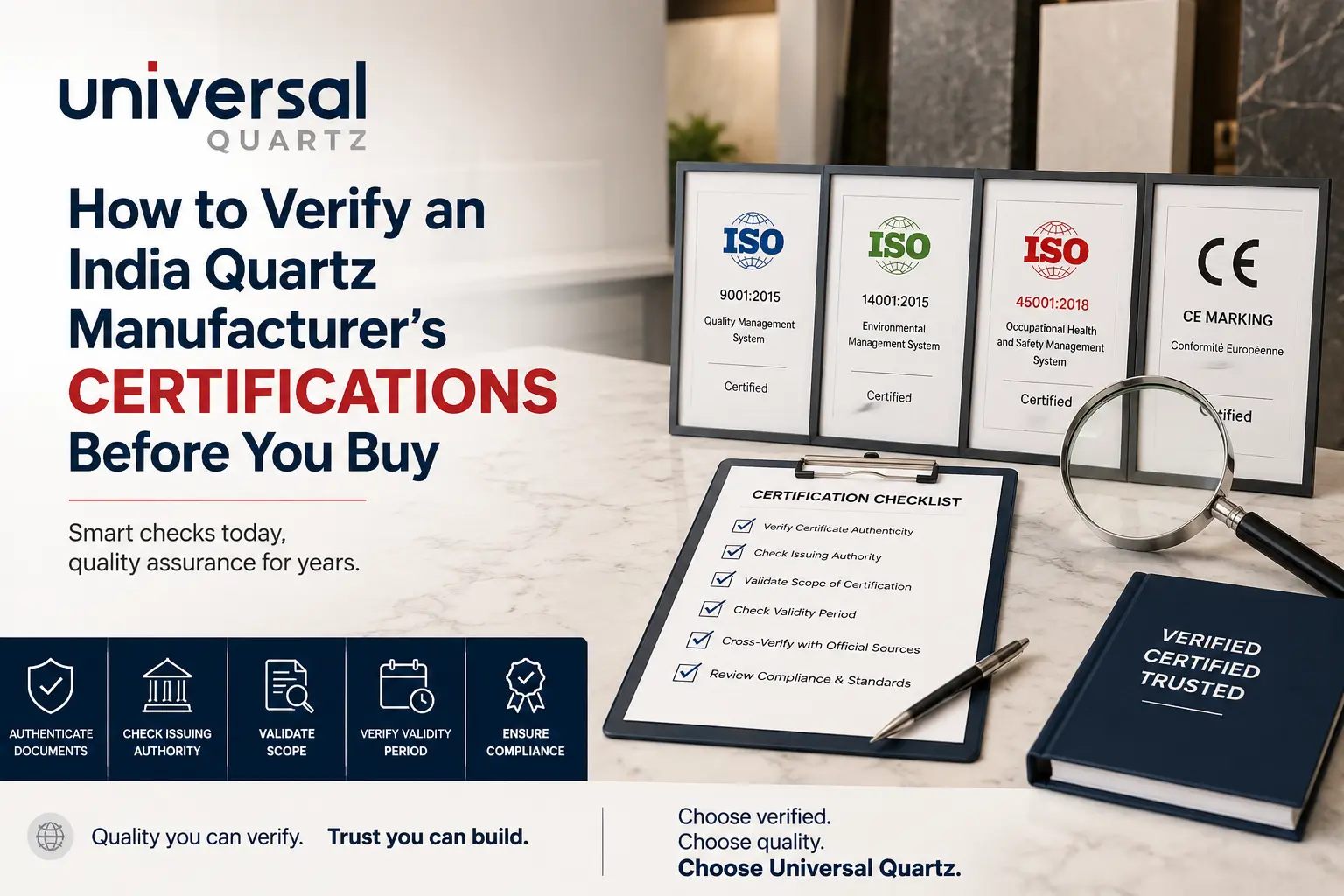
Anyone can put a certification logo on their website. The real question is whether that certification is genuine, current, and actually applies to the product you’re buying. This guide walks you through, in plain language, how to verify an India quartz manufacturer’s certifications before you sign a contract — so you’re not relying on trust alone.
Why Certifications Matter in the First Place
Certifications are issued by independent, third-party organizations, not by the manufacturer itself. That’s what makes them useful: they’re a way for someone outside the company to confirm that a product meets a specific safety, quality, or environmental standard. For a kitchen or bathroom surface, this can affect your health, your air quality, and how long the product lasts.
The Certifications You Should Ask About
NSF/ANSI 51 — Food Contact Safety
This certification confirms the quartz surface is safe for direct contact with food. It matters most for kitchen countertops, where you’re chopping, prepping, and sometimes placing food directly on the surface.
GREENGUARD Gold — Indoor Air Quality
This certification confirms the product releases very low levels of chemicals into the air. It’s especially relevant for indoor spaces like kitchens and bedrooms, where you and your family spend a lot of time.
ISO 9001:2015 — Manufacturing Quality
This certification confirms the factory follows a consistent, documented quality-control process, rather than producing slabs with inconsistent quality from batch to batch.
CE Mark — European Compliance
This mark is required for products sold in the European Union. Even if you’re buying in India, a manufacturer holding a CE mark is a sign they meet international manufacturing standards, since export-grade products are generally held to tighter quality checks.
LEED / IGBC — Green Building Standards
These relate to environmentally friendly building practices. They’re worth checking if your renovation or construction project is targeting green building credits.
How to Actually Verify These Certifications, Step by Step
Step 1: Ask for the Certificate, Not Just the Logo
A logo on a website or brochure proves nothing on its own. Ask the manufacturer directly for a copy of the actual certificate, which should include the certifying body’s name, a certificate or license number, and an issue date.
Step 2: Check the Certifying Body Is Real and Independent
Search for the certifying organization separately (for example, NSF International or the ISO organization) and confirm they are a real, independent body — not a name invented by the manufacturer itself.
Step 3: Confirm the Certificate Hasn’t Expired
Certifications like ISO 9001:2015 typically need to be renewed periodically through audits. Check the issue date and any renewal or expiry date listed on the certificate.
Step 4: Confirm the Certificate Applies to the Actual Product
Large manufacturers sometimes produce multiple product lines. Make sure the certificate you’re shown actually covers the specific quartz series or slab you’re planning to buy, not just the company in general.
Step 5: Ask Where the Certificate Can Be Independently Confirmed
Many certifying bodies keep public directories or offer a way to verify a certificate or license number directly through their own website or by contacting them. A manufacturer confident in their certifications should be comfortable pointing you toward that verification path.
Red Flags to Watch For
- The manufacturer can only show you a logo image, not an actual certificate document
- They can’t tell you the name of the certifying body or a certificate number
- The certificate has an expired date, or no date at all
- They get defensive or evasive when you ask for verification details
- The certificate is for a different product line than the one you’re being sold
A Quick Word on Experience
Verifying certifications is easier when you’re dealing with an established manufacturer. Companies with many years in the industry, a track record of exporting internationally, and multiple current certifications generally have more to lose by misrepresenting their credentials — and more practice being transparent about them, since export markets often require this documentation as standard practice.
Frequently Asked Questions
What is the most important certification for kitchen quartz?
NSF/ANSI 51 is the most directly relevant for kitchens, since it confirms the surface is safe for contact with food.
How can I check if a certificate is fake?
Ask for the actual certificate document with a certifying body name and certificate number, then check if that certifying body is a real, independent organization and whether they offer a way to confirm the certificate directly.
Do all India quartz manufacturers have the same certifications?
No. Certification levels vary significantly between manufacturers. Some hold multiple international certifications, while others may have few or none, which is exactly why it’s worth checking before you buy.
Does a CE mark matter if I’m buying in India?
Yes, indirectly. A CE mark shows the manufacturer meets international standards well enough to sell in demanding export markets, which is a useful, independent signal of overall manufacturing quality.
What should I do if a manufacturer refuses to show certificates?
Treat this as a serious warning sign. A manufacturer confident in their quality and safety standards should have no issue providing certificate documentation when asked.
Final Thoughts
Certifications exist to protect you, but only if you take the extra step of checking they’re real, current, and relevant to the actual product you’re buying. Ask for documents, not logos, confirm the certifying body is independent, and don’t be afraid to walk away if a manufacturer can’t back up their claims. This small amount of due diligence can save you from a costly mistake in a renovation that’s meant to last for years.