Quartz countertops have become one of the most preferred surface materials in modern homes because they offer a perfect combination of beauty, durability, and easy maintenance. Whether you are designing a luxury kitchen, a stylish bathroom, or a modern office space, quartz surfaces provide a clean and elegant appearance that fits almost every interior style. Many homeowners choose quartz because it looks premium while also handling everyday use very well. However, people still have many questions about how resistant quartz actually is. Can it resist scratches? Does it handle heat? Is it safe from stains and moisture? The truth is that quartz is one of the most durable countertop materials available today, but understanding its strengths and limitations helps homeowners maintain it properly for many years. In this article, we will explain everything about quartz durability, resistance, maintenance, and long-term performance in a simple and easy-to-understand way.
What Is Quartz Countertop Material?
Quartz countertops are engineered stone surfaces made using natural quartz minerals mixed with resin, pigments, and binding materials. Usually, quartz slabs contain around 90 to 95 percent natural quartz, and the remaining percentage consists of polymers and resins that help bind the material together. This manufacturing process creates a strong, non-porous, and highly durable surface that performs exceptionally well in kitchens and bathrooms. Unlike natural stones such as marble or granite, quartz surfaces are engineered under controlled conditions, which means they offer more consistent colors, patterns, and finishes. This consistency is one of the biggest reasons why quartz has become extremely popular in modern interior design. Because of its non-porous structure, quartz does not easily absorb liquids, stains, or bacteria, making it a hygienic and low-maintenance option for residential and commercial spaces.
Quartz Countertops and Heat Resistance
When it comes to countertop materials, heat resistance is a critical consideration for many homeowners, especially in kitchens where high temperatures are regularly involved. Quartz countertops, while durable and resilient, are not as heat-resistant as natural stones like granite or marble. Here’s what you need to know about quartz countertops, and their ability to withstand heat:
1. Limited Heat Resistance
Quartz countertops are engineered to be highly durable, but they do have their limits when it comes to heat exposure. Unlike granite, which can handle extreme temperatures, quartz countertops can be damaged by direct heat from hot pots, pans, or cooking appliances.
The resin used to bind the quartz crystals together in engineered countertops can be sensitive to heat. High temperatures—typically above 150°F (65°C)—can cause the resin to soften, discolor, or even warp. This means that while quartz countertops are heat-resistant to some extent, placing a hot pan directly on the surface is not recommended and can cause permanent damage over time.
2. The Importance of Trivets and Hot Pads
To ensure that your quartz countertops remain in good condition, it’s important to use trivets, hot pads, or cooling racks to protect the surface from direct heat. By placing a trivet or hot pad between the hot object and the countertop, you create a barrier that prevents excessive heat from coming into contact with the quartz surface, helping to avoid potential damage.
Although quartz can withstand moderate heat, it’s always best to take precautions by using heat-resistant tools and avoiding placing hot items directly on the surface. This simple habit will help maintain the integrity and appearance of your quartz countertops over time.
3. Heat Resistance vs. Other Countertop Materials
In comparison to other countertop materials, quartz is not as heat-resistant as granite or marble. Let’s take a look at how quartz stacks up against these materials when it comes to handling heat.
- Granite Countertops: Granite is a natural stone that is highly heat-resistant. Granite countertops can withstand direct heat from pots and pans without warping, discolouring, or becoming damaged. This makes granite an excellent choice for kitchens where heat exposure is common. Unlike quartz, granite countertops do not require special precautions against heat.
- Marble Countertops: While marble is more heat-resistant than quartz, it is still not as durable under extreme heat as granite. Like quartz, marble countertops can become damaged if exposed to extremely high temperatures for prolonged periods. However, marble’s ability to withstand heat makes it more suitable for tasks like baking and cooking, where high heat is involved.
- Quartz Countertops: As mentioned earlier, quartz is heat-resistant to a certain extent, but it is not as heat-tolerant as granite or marble. For best results, it’s important to avoid placing hot cookware directly on quartz surfaces and always use a trivet or heat pad to protect the countertop.
Can You Put Hot Pans on Quartz?
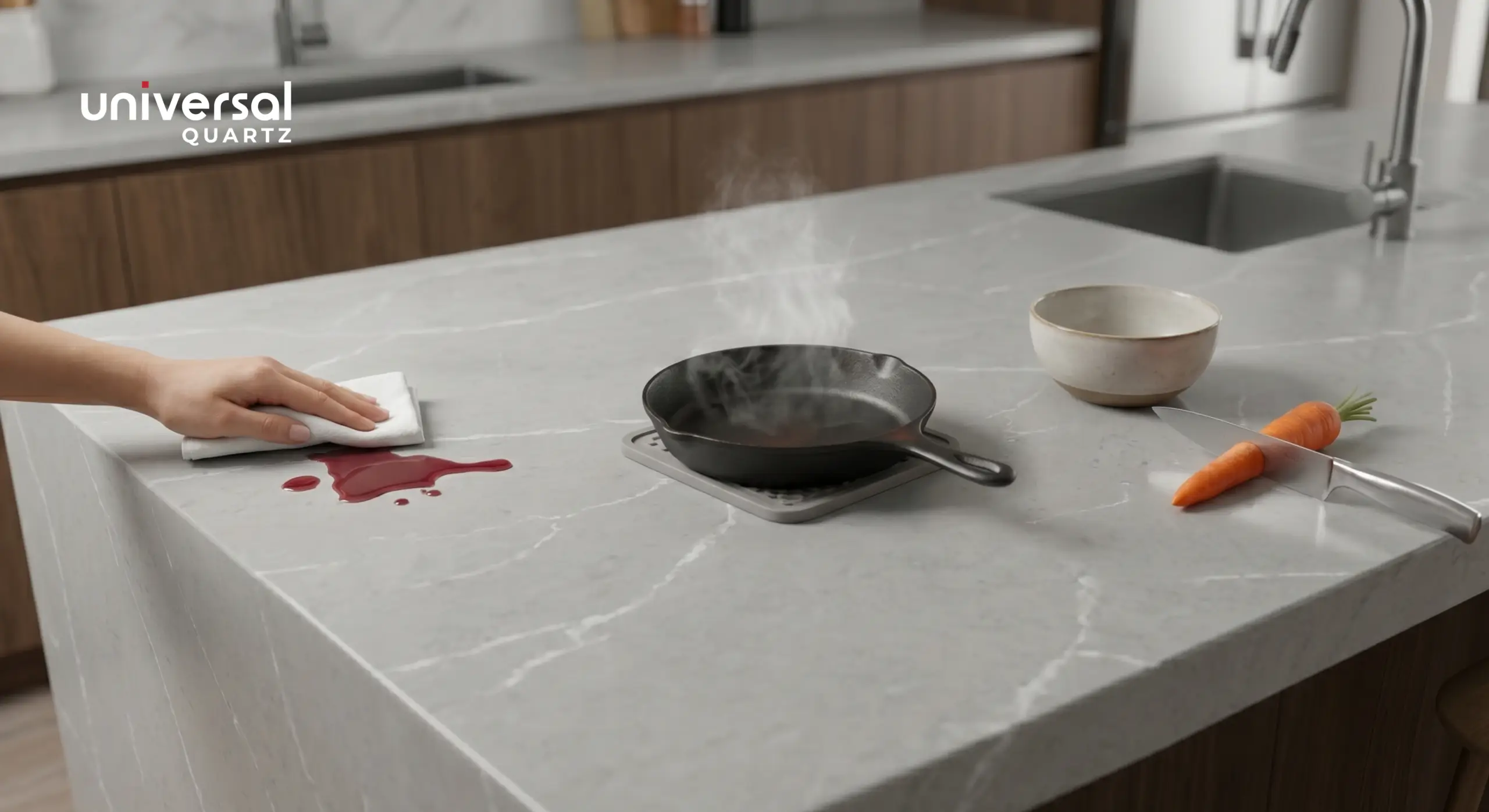
Many homeowners assume quartz countertops can handle any amount of heat because they are considered durable surfaces. However, placing extremely hot cookware directly on quartz is not recommended. The resin used during the manufacturing process can react to excessive heat, especially when the temperature changes suddenly. Over time, this may cause fading, discoloration, surface cracks, or permanent damage. Even high-quality quartz slabs can suffer from heat stress if exposed repeatedly to hot utensils and cookware. Using trivets, heat-resistant mats, or protective pads is always the safest option. These small precautions help maintain the beauty and strength of the countertop for many years. Quartz is designed to perform exceptionally well in everyday kitchens, but understanding its heat limitations is important for proper long-term maintenance.
Is Quartz Resistant to Water and Moisture?
Quartz countertops are highly resistant to water and moisture because they are engineered to be non-porous. This means water cannot easily seep inside the surface, making quartz ideal for wet areas such as kitchens, bathrooms, laundry spaces, and vanity tops. Unlike natural stones that may require sealing to prevent water absorption, quartz surfaces naturally resist moisture without needing additional treatments. This moisture resistance helps prevent issues such as swelling, staining, bacterial buildup, and mold growth. In busy households where countertops are exposed to water regularly, quartz offers excellent long-term durability with minimal maintenance. Whether it is water splashes near sinks or steam exposure in bathrooms, quartz continues to maintain its appearance and performance very effectively.
Is Quartz Resistant to Stains?
One of the biggest advantages of quartz countertops is their excellent stain resistance. Since quartz is a non-porous material, liquids and spills cannot easily penetrate the surface. This makes quartz much easier to clean compared to many natural stones that absorb moisture and stains over time. Every day, kitchen spills like coffee, tea, juice, wine, oil, ketchup, turmeric, and sauces can usually be wiped away easily without leaving permanent marks. This feature is especially useful in Indian kitchens where strong spices and cooking ingredients are used daily. Because quartz does not absorb liquids quickly, homeowners do not need to worry constantly about accidental spills damaging the countertop surface. However, it is still a good habit to clean spills quickly instead of leaving them for long periods. Although quartz is highly stain-resistant, extremely strong chemicals or highly pigmented substances left for extended hours may affect the finish slightly. Regular cleaning with mild soap and water is usually enough to keep quartz countertops looking fresh and spotless.
Advantages of Quartz Countertops Beyond Heat Resistance
While quartz countertops may not be as heat-resistant as granite or marble, they offer many other advantages that make them a great choice for homeowners. Here are some of the benefits of choosing quartz for your kitchen or bathroom:
1. Durability and Scratch Resistance
Quartz is an incredibly durable material and is highly resistant to scratches and dents. It is a non-porous material, meaning it won’t absorb liquids, bacteria, or stains. This makes it an excellent choice for kitchens and bathrooms, where spills and messes are common.
2. Low Maintenance
One of the main advantages of quartz countertops is their low maintenance. Unlike natural stone countertops, which require periodic sealing to maintain their appearance, quartz is non-porous and does not require sealing. This makes cleaning and upkeep much easier, as quartz countertops can simply be wiped down with soap and water.
3. Variety of Colors and Patterns
Quartz countertops come in a wide variety of colors, patterns, and finishes. Because quartz is engineered, manufacturers can create a consistent look that mimics the appearance of natural stone, including marble and granite. Whether you prefer bold, modern hues or a more traditional stone look, quartz offers endless design possibilities.
4. Consistent Look
Unlike granite, which has natural variations in its pattern, quartz countertops offer a more consistent appearance. This makes quartz an excellent choice for homeowners who prefer uniformity in their countertop design.
How to take care of quartz countertops?
Well, you can take care of quartz countertops by following the simple steps below
- Use a chopping board: Although quartz is scratch-resistant, it doesn’t mean that it can sustain abuse from a knife when you use the same to cut veggies. Always use a chopping board as it is the only way to ensure that the surface of the countertop is free from microscopic scratches, which can act as grime/stain collectors over time.
- Use a pH-neutral cleaner : Avoid using harsh chemical cleaning products or abrasives such as baking powder to clean the quartz countertop. Use a pH-neutral cleaner to clean the counter along with a sponge.
- Never scrape dried gunk off your quartz countertop: Never leave spilled sauce, gravy, or related food particles for extended periods on your quartz countertop. Make sure you wipe the countertop clean and never scrape the dried food residue. Instead, just clean with a mild sponge and a neutral pH cleaner.
FAQs About Quartz Countertops
Is a quartz countertop completely scratch-proof?
No. Quartz is highly scratch-resistant but not completely scratch-proof. Using cutting boards is always recommended.
Can quartz countertops crack easily?
No. Quartz is very strong and durable, but heavy impacts or poor installation can cause cracks or chips.
Does quartz require sealing?
No. Quartz countertops are non-porous and do not require regular sealing like granite or marble.
Can hot pans damage quartz?
Yes. Extreme heat can damage the resin inside quartz surfaces. Always use trivets or heat pads.
Is quartz better than granite?
Quartz is better for low maintenance and stain resistance, while granite offers more natural beauty and higher heat resistance.
Is quartz good for Indian kitchens?
Yes. Quartz is an excellent option for Indian kitchens because it is easy to clean, stain-resistant, and durable for daily cooking.
Does quartz absorb water?
No. Quartz is non-porous and highly resistant to water absorption.
How do you clean quartz countertops?
Use a soft cloth, mild soap, and warm water for regular cleaning. Avoid harsh chemicals and abrasive cleaners.
Can quartz fade in sunlight?
Yes. Continuous direct sunlight exposure may cause slight fading over time, especially in outdoor applications.
How long do quartz countertops last?
With proper maintenance, quartz countertops can last 15–30 years or more.