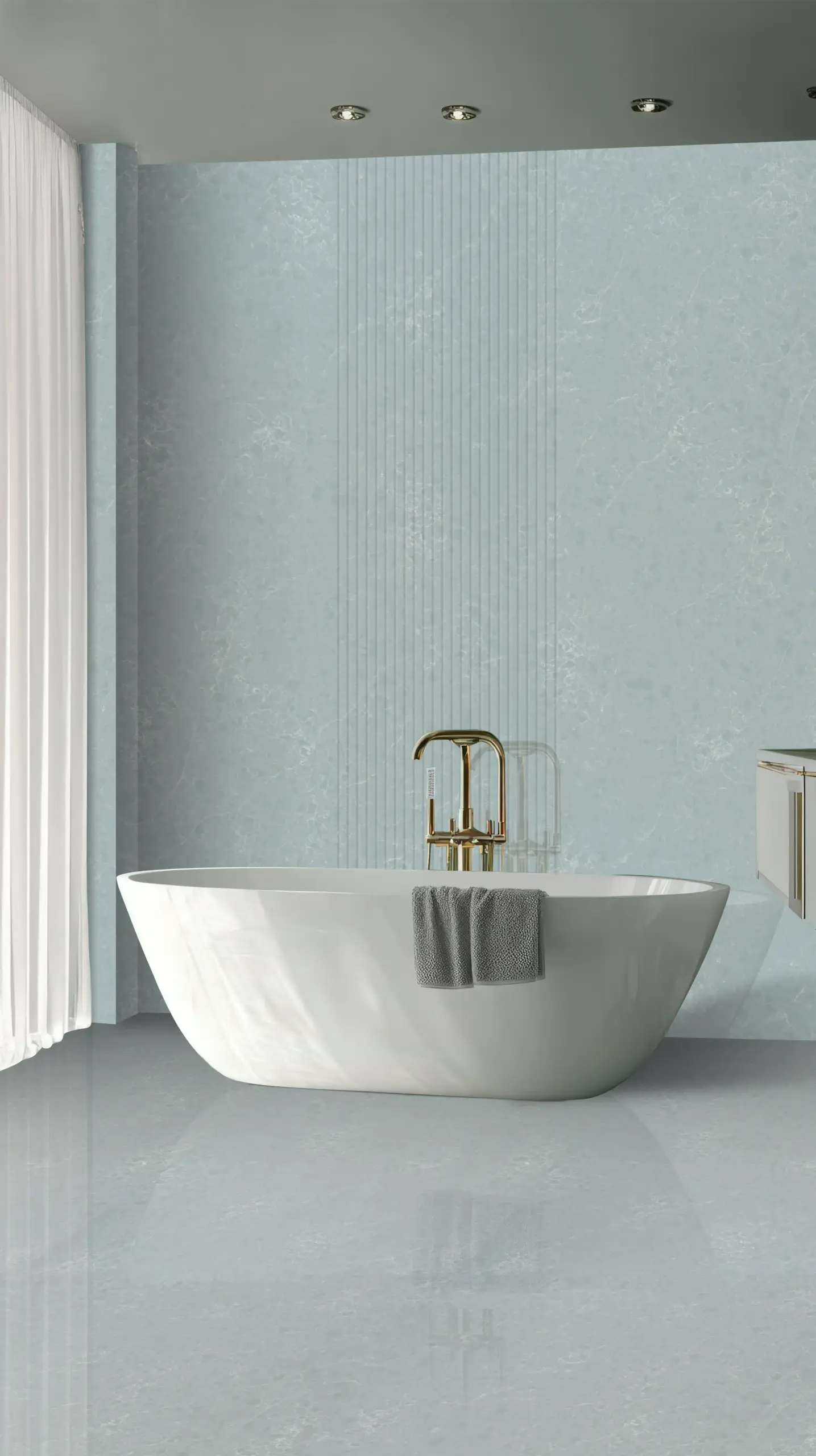
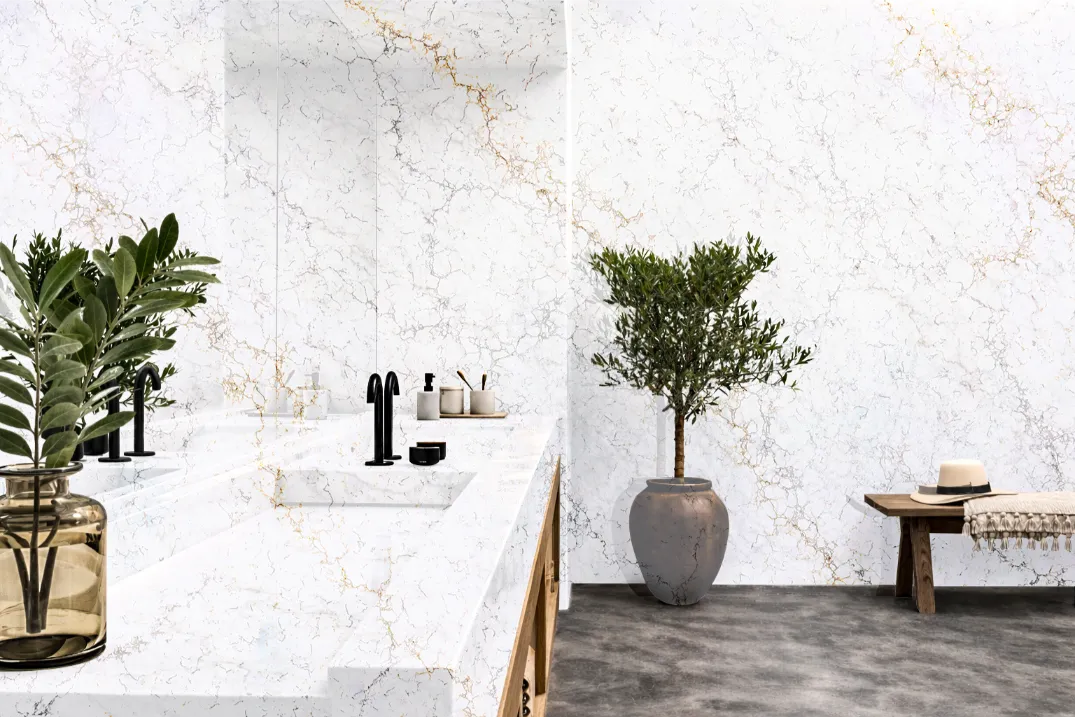
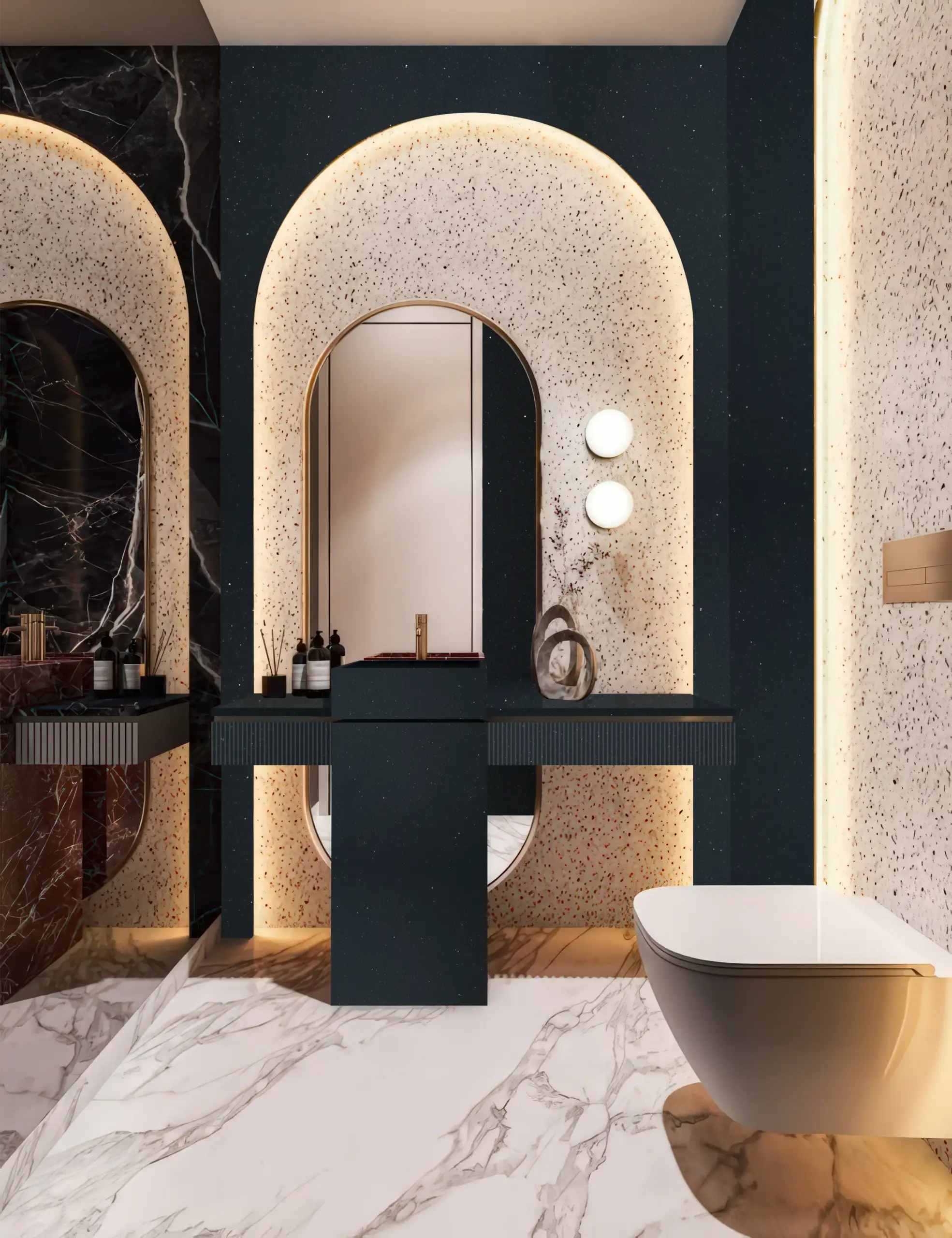
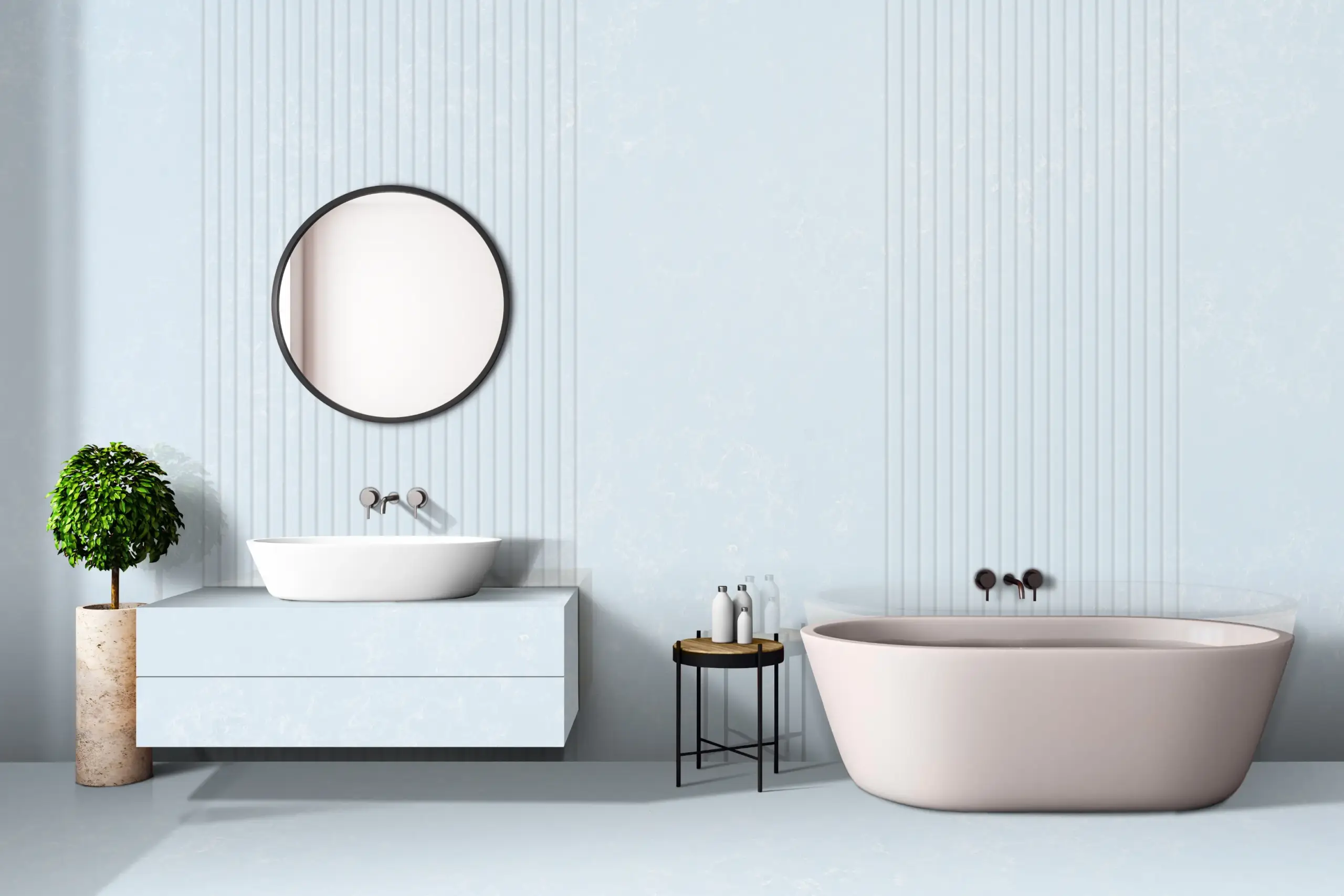
Quartz Stone For Bathroom
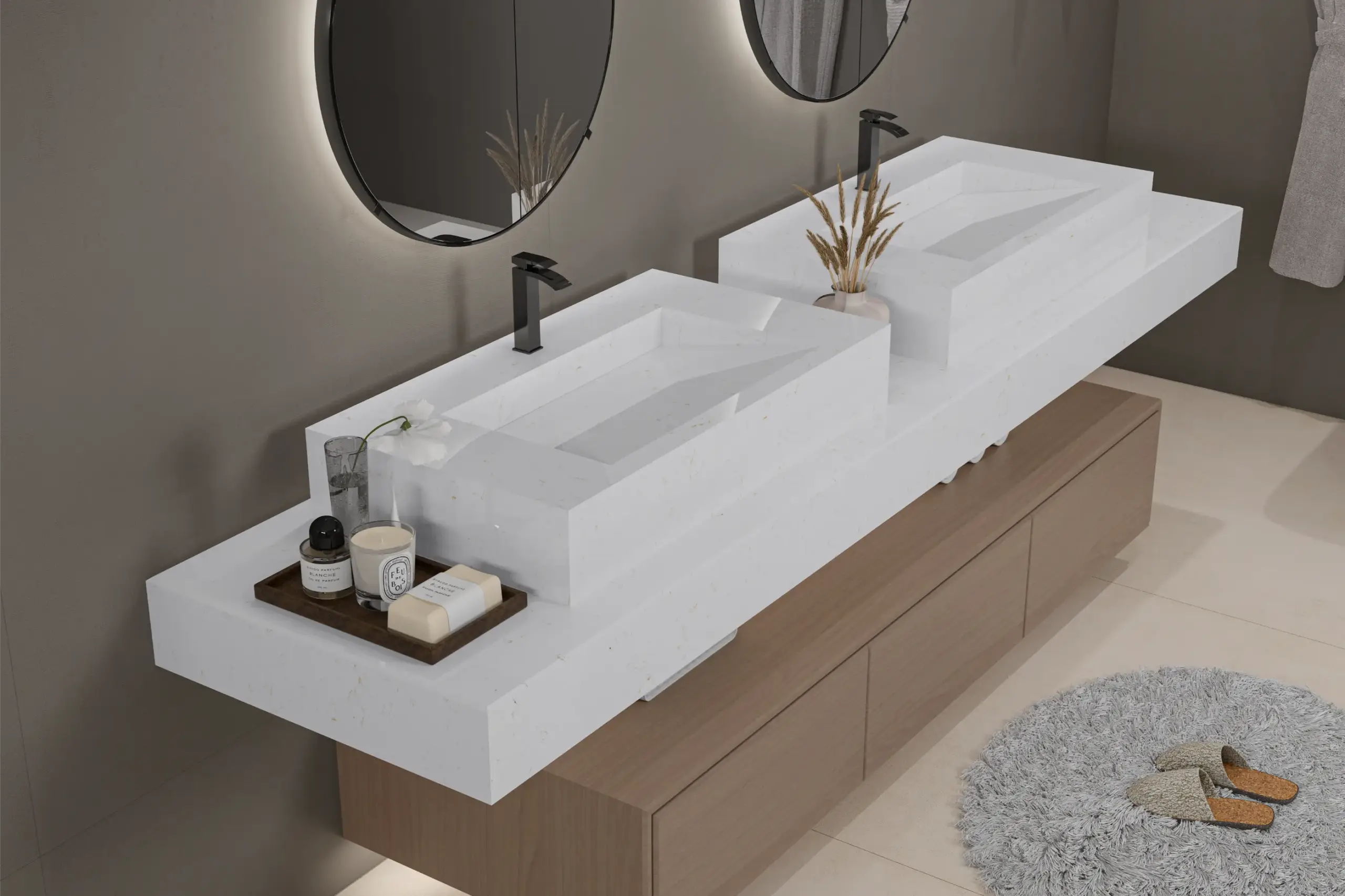
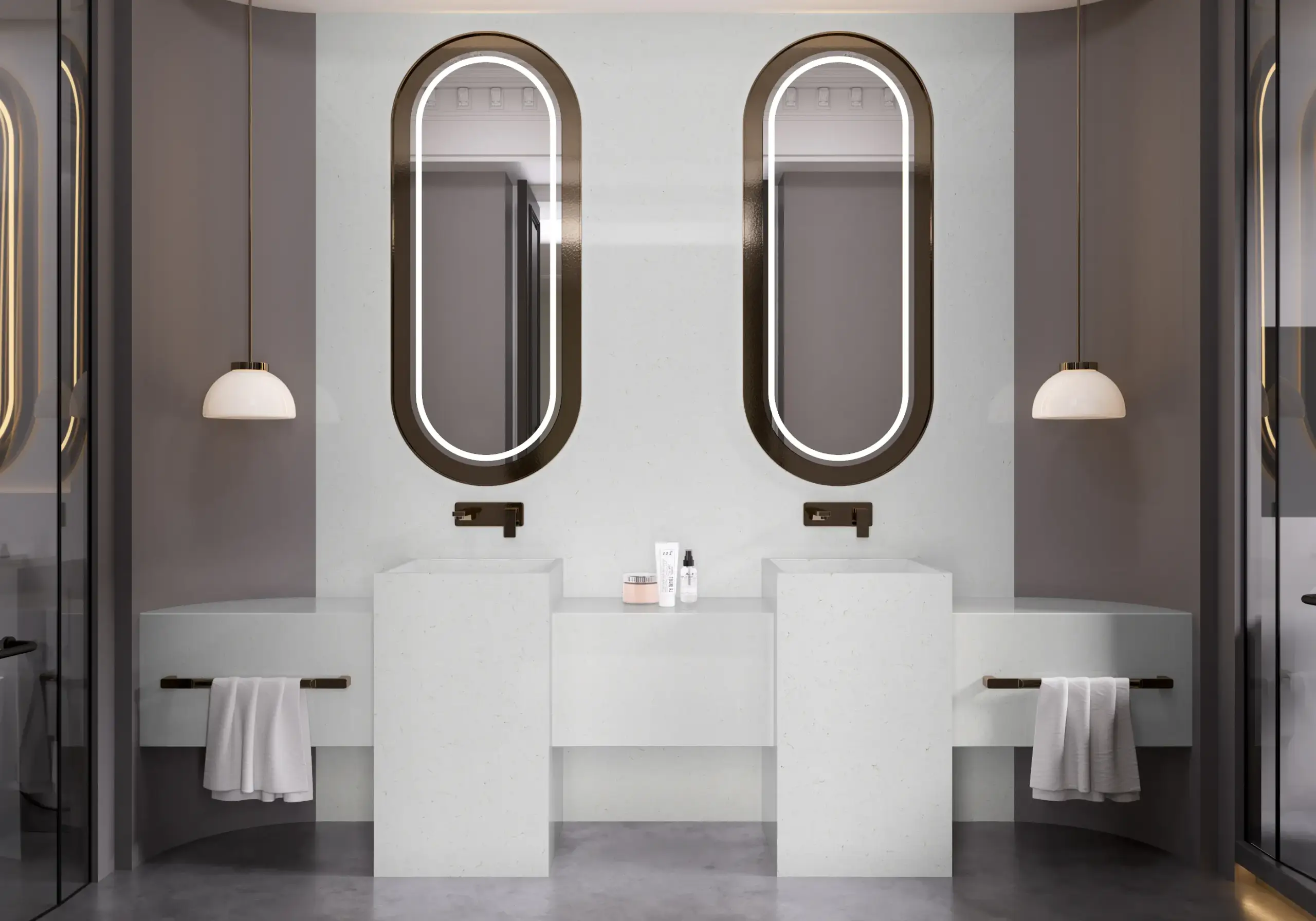
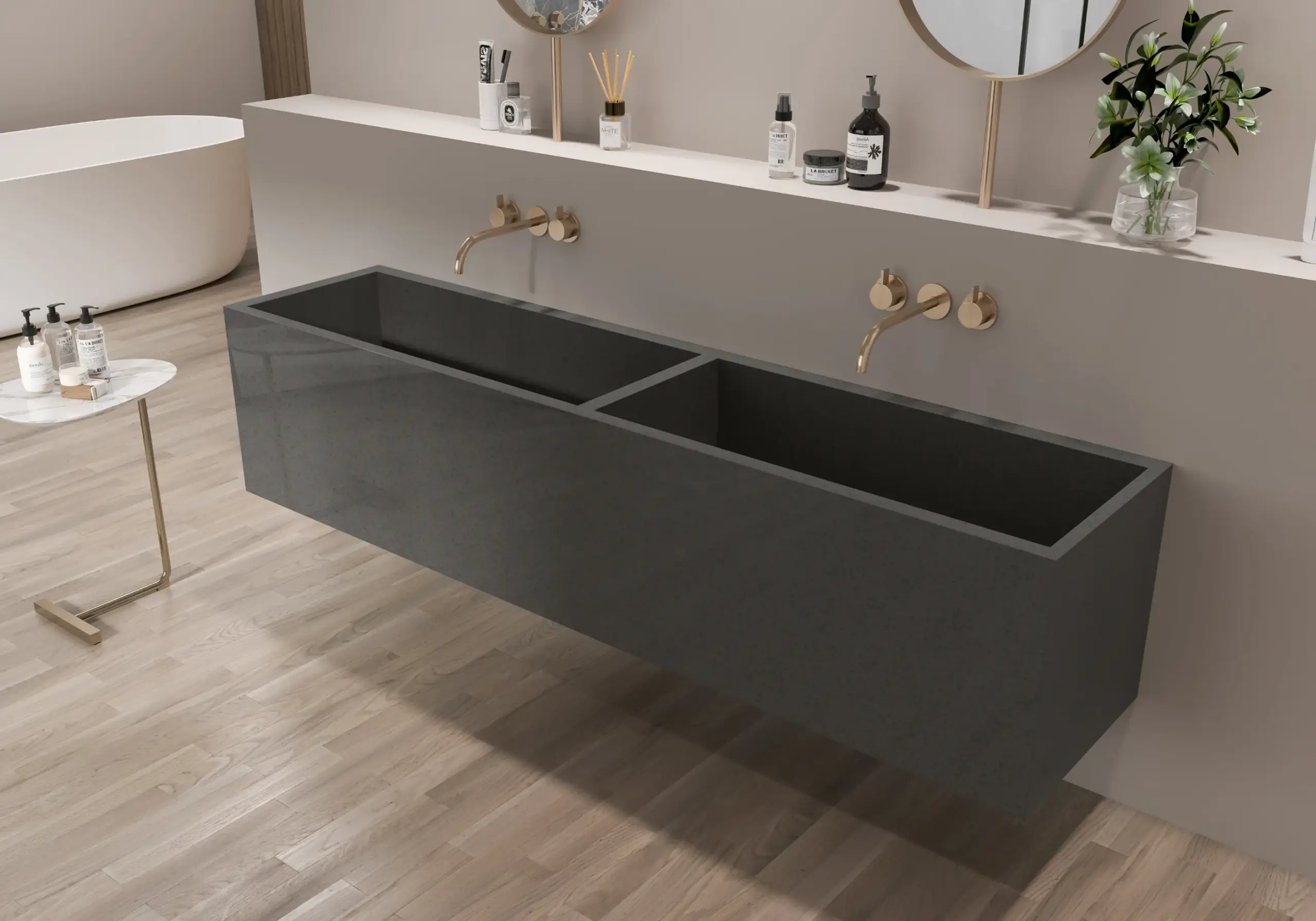
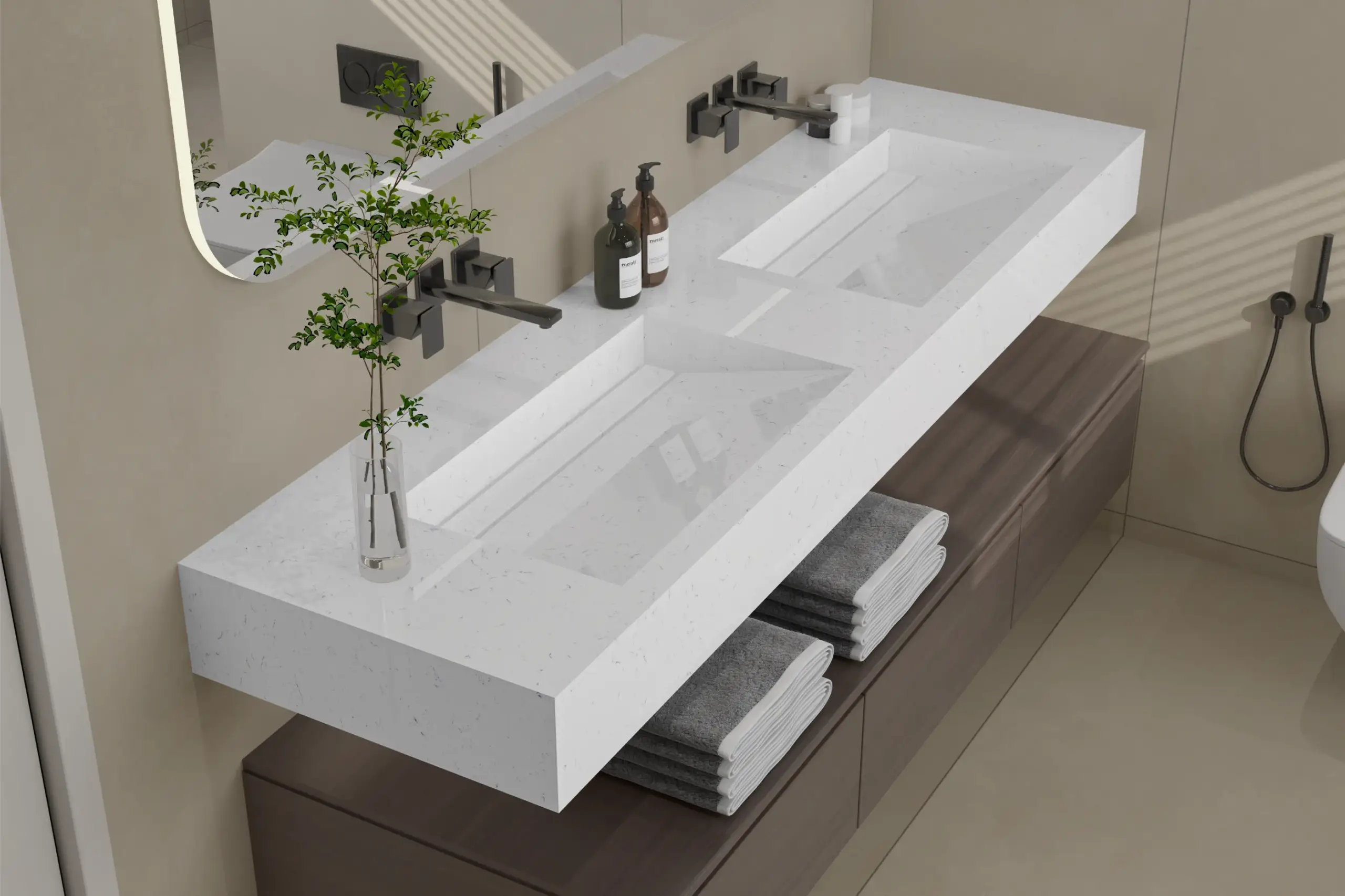
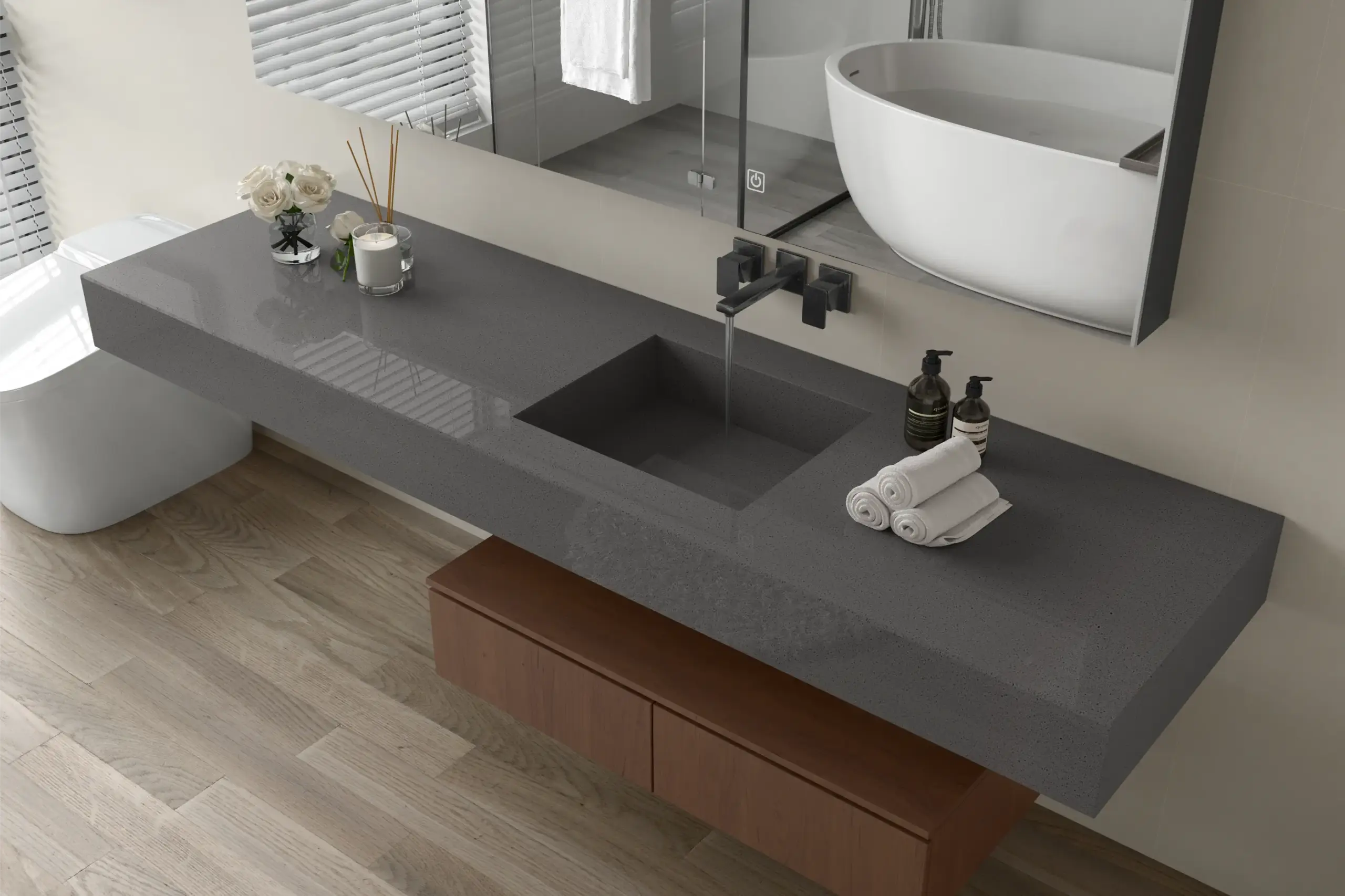
Bathrooms are one of the toughest spaces to design — constant humidity, standing water, soap scum, and daily scrubbing wear surfaces down fast. Quartz stone for bathrooms solves this by combining engineered durability with a marble-like finish, making it one of the most trusted materials for vanity tops, shower walls, flooring, and shelving in both homes and commercial spaces.
Unlike natural stone, engineered quartz is manufactured from roughly 90–93% natural quartz crystals bound with resin under high pressure. The result is a non-porous surface that doesn’t need sealing, resists mold and mildew, and holds its color and shine for decades — even in India’s humid coastal cities or hard-water regions.
Why Quartz Is the Right Choice for Bathroom Surfaces
Completely Water & Moisture Resistant
Because quartz slabs are non-porous, water cannot seep into the surface the way it can with marble, granite, or grout lines in tiles. This eliminates the two biggest bathroom problems: staining and mold growth behind the surface.
No Sealing, Ever
Natural stones like marble and granite need re-sealing every 1–2 years to stay water-resistant. Quartz never needs sealing — the resin binding already makes it impermeable from day one.
Hygienic and Bacteria-Resistant
A non-porous surface has nowhere for bacteria, mold, or mildew spores to take hold, which matters most in a room that stays damp for hours after every shower.
Scratch and Impact Resistant
Bathroom accessories, razors, bottles, and daily use can dent softer stones over time. Quartz’s engineered hardness holds up to daily wear without chipping or scratching.
Stain Resistant
Hair dye, cosmetics, soap, and hard-water spots wipe off easily since nothing absorbs into the surface — a quick wipe with mild soap and water is usually enough.
Consistent Colour and Pattern
Because quartz is engineered rather than quarried, every slab in a batch matches — useful when a vanity top, shower wall, and flooring need to look seamless together.
Wide Design Choice
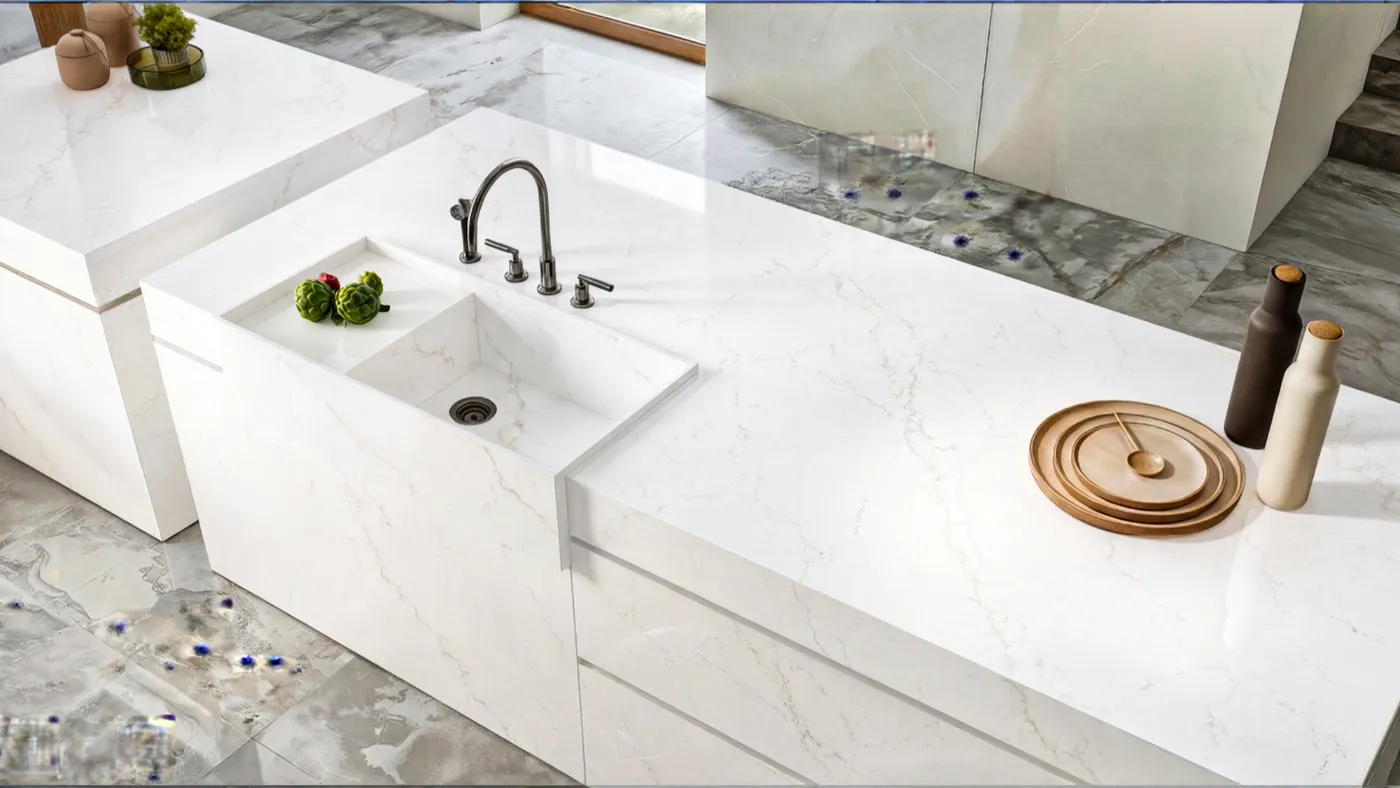
From pure whites and warm beiges to bold veined patterns that mimic Calacatta or Carrara marble, quartz gives designers the look of natural stone without its maintenance demands.
Best Bathroom Applications for Quartz Stone
Application | Why Quartz Works Well |
Vanity Tops & Countertops | Non-porous surface resists cosmetics, water rings, and daily wear |
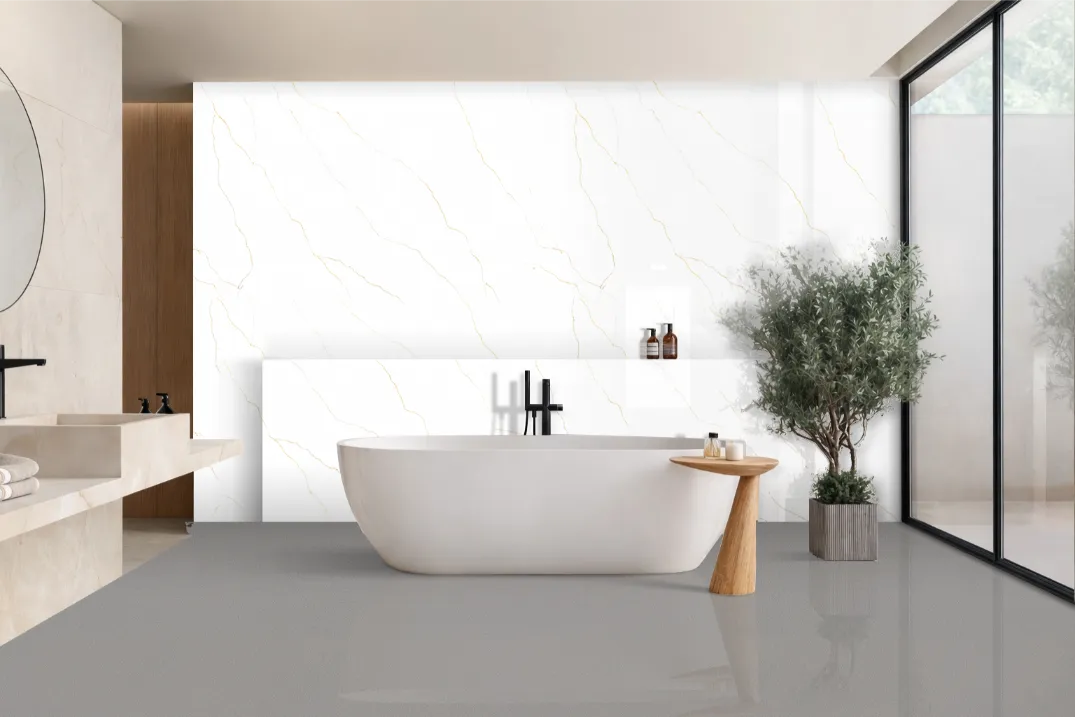
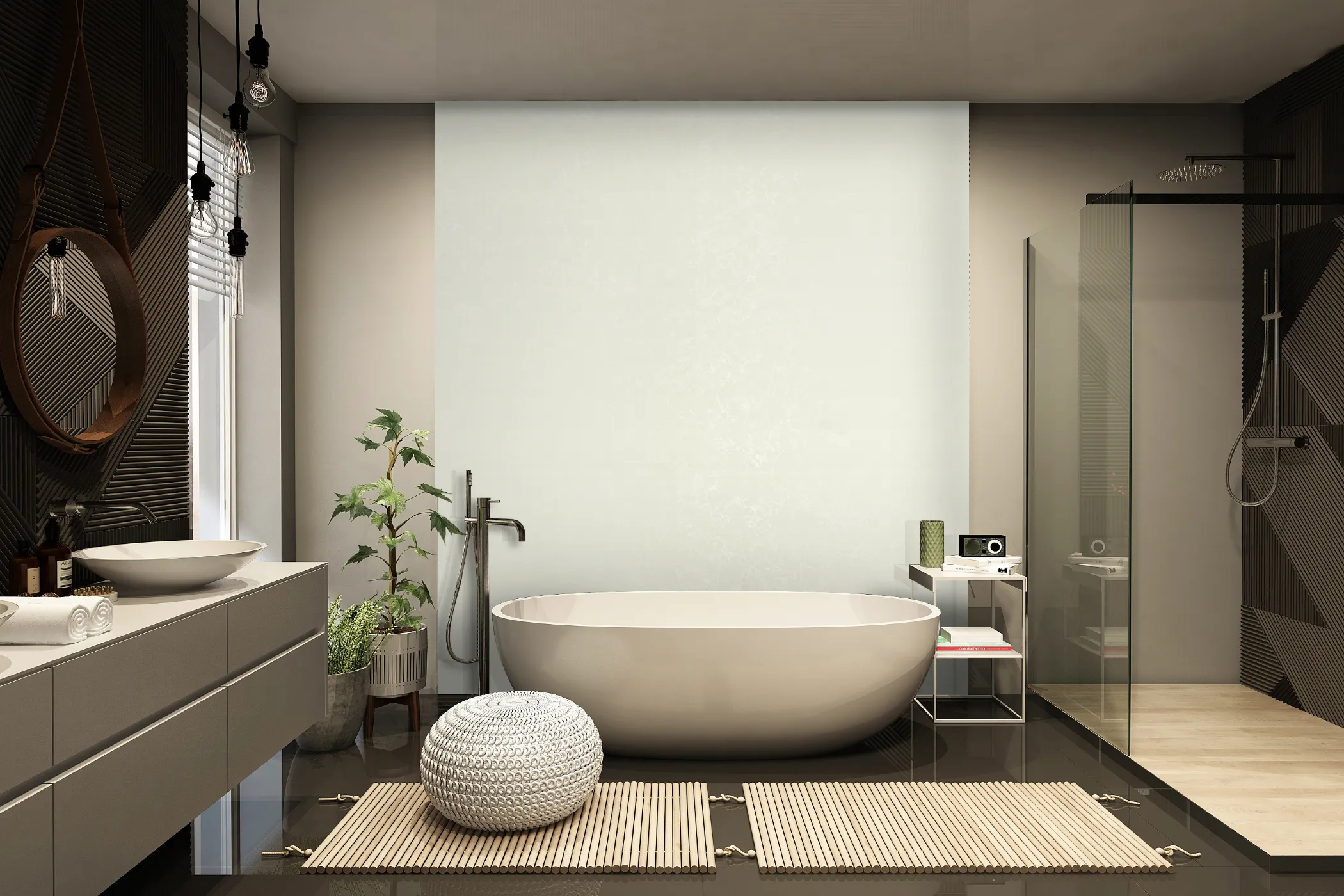
Shower Walls & Wall Cladding | Fewer grout lines than tiles mean less mold and easier cleaning |
Bathroom Flooring | Slip-resistant finishes available; withstands constant moisture |
Shelving & Niches | Custom-cut to fit shower niches without water damage over time |
Bathtub Surrounds | Seamless slabs reduce joints where water and grime typically collect |
Quartz vs. Marble vs. Tiles for Bathrooms
Quartz vs. Marble:
Marble is porous and etches with acidic products (shampoo, cleaning agents); it needs regular sealing. Quartz needs none and resists etching entirely.
Quartz vs. Granite:
Granite is more durable than marble but still porous and requires periodic sealing. Quartz offers comparable strength with zero maintenance.
Quartz vs. Tiles:
Tiled surfaces have grout lines that trap moisture and discolor over time. Large quartz slabs minimize joints, reducing mold-prone areas significantly.
How to Maintain a Quartz Bathroom Surface
- Wipe with a soft cloth and mild soap or pH-neutral cleaner after use.
- Avoid harsh abrasives, bleach-heavy cleaners, or steel wool — they can dull the surface finish.
- Wipe up standing water or hard-water spots to prevent mineral buildup.
- No sealing or polishing required — quartz retains its finish without upkeep.
Why Choose Universal Quartz for Bathroom Surfaces
Universal Quartz manufactures premium engineered quartz slabs using advanced European technology, backed by ISO, CE, Greenguard, and Green Building certifications. Our bathroom-ready quartz collections — including Harmony, Jupiter, Saturn, Venus, Mercury, Mars, Neptune, and Uranus — offer a wide range of colors, veining patterns, and finishes suited for both residential bathrooms and large-scale commercial projects such as hotels and hospitals.
With manufacturing based in Jaipur and branch support across Delhi/NCR, Mumbai, Chandigarh, Gujarat, Tamil Nadu, Nagpur, and Uttar Pradesh, we help architects, interior designers, and homeowners source consistent, high-quality quartz slabs with reliable supply and technical support.
Conclusion
Quartz stone for bathrooms delivers what few other materials can: the elegance of natural stone with none of the maintenance burden. Its non-porous, stain-resistant, and hygienic properties make it ideal for vanity tops, shower walls, and flooring in any climate — including India’s humid and hard-water-prone regions. For a bathroom that stays beautiful for decades with minimal upkeep, quartz remains one of the smartest surface investments available today.
FAQs
Is quartz good for bathroom countertops and walls?
Yes. Quartz is non-porous, waterproof, and doesn’t need sealing, making it one of the most practical materials for bathroom vanity tops, shower walls, and flooring.
Does quartz stone need sealing like marble or granite?
No. Quartz is engineered with resin, which makes it impermeable from the start. Unlike marble or granite, it never needs to be sealed or resealed.
Can quartz be used in shower areas and wet zones?
Yes. Quartz handles constant moisture well since water cannot penetrate its surface. It’s commonly used for shower walls, niches, and bathtub surrounds.
Is quartz resistant to stains from cosmetics and hard water?
Yes. Because the surface is non-porous, soap, hair dye, cosmetics, and hard-water deposits sit on top of the surface and wipe away easily rather than soaking in.
How do I clean and maintain a quartz bathroom surface?
Simply wipe with a soft cloth and mild, pH-neutral soap. Avoid bleach-based or abrasive cleaners, and wipe up standing water to prevent mineral spotting over time.
Is quartz better than tiles for bathroom walls and floors?
Quartz slabs have far fewer joints than tiled surfaces, which reduces the grout lines where mold and mildew typically build up, making it easier to keep clean long-term.
Does quartz stone develop mold or mildew in humid bathrooms?
No. Since quartz doesn’t absorb moisture, it doesn’t provide the damp, porous conditions mold and mildew need to grow, even in high-humidity bathrooms.
What colors and finishes are available for bathroom quartz slabs?
Universal Quartz offers a wide range, from clean whites and warm beige tones to marble-look veined patterns, in polished, matte, and textured finishes to suit different bathroom styles.
Is quartz suitable for both residential and commercial bathrooms?
Yes. Its durability and low maintenance make it equally suited to home bathrooms and high-traffic commercial spaces like hotels, hospitals, and offices.
How much does quartz stone cost for bathroom applications compared to marble?
Quartz pricing is generally comparable to mid-to-premium marble, but its zero maintenance and sealing costs make it more cost-effective over the surface’s lifetime. Contact Universal Quartz for slab-specific pricing.
Bathroom Gallery